
The Ultimate Guide to VAT and GST for Beginners: Introduction
This is my personal experience.
I have been working in eCommerce for the last 5 years. Earlier, I was working mainly in Pakistan where GST tax is commonly applied. Later, I started dealing with clients and platforms in India, the UK, and the USA, and I became confused about which type of tax applies in each country.
I did not fully understand the difference between:
- GST in countries like Pakistan and India
- VAT in the UK
- Sales Tax in the USA
Then I found a helpful tool and article on the GCB (Get Calculator Base) website. It explained the tax systems in a very simple way and showed how different countries use different taxation methods.
After using the tool, I was able to understand:
- Which tax applies in which country
- Estimated tax percentage
- How tax affects product pricing
- Basic calculation and comparison between regions
This helped me manage my eCommerce work more confidently and understand international tax systems better.
Let’s be honest: no one starts a business because they love doing taxes. Most of us start because we have a passion for a product or a service. But as soon as that first invoice is sent, reality hits—you have to deal with VAT or GST.
Whether you are looking for a sales tax calculator / vat calculator to price your products or trying to understand how to get your money back from the government, this guide is for you. As a developer who has spent years building financial tools, I’ve seen where most beginners trip up. Let’s simplify the world of indirect taxes together.
What Exactly are VAT and GST?
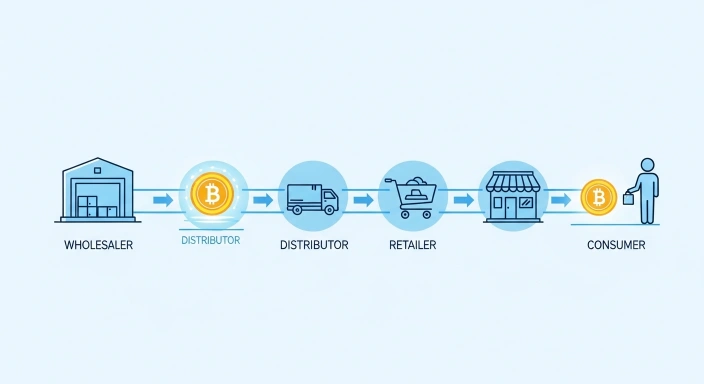
At their core, both Value Added Tax (VAT) and Goods and Services Tax (GST) are consumption taxes. This means the person who eventually uses the product pays the tax.
- VAT (Value Added Tax): Popular in the UK, Europe, and the Middle East. It’s collected at every stage of the supply chain where “value” is added.
- GST (Goods and Services Tax): The preferred term in Australia, New Zealand, Canada, India, and Pakistan. It functions almost exactly like VAT.
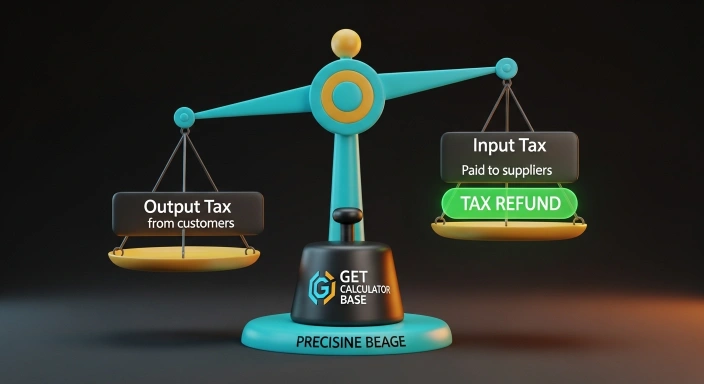
The goal for a beginner is simple: you collect tax from your customers (Output Tax) and pay tax to your suppliers (Input Tax). The difference between the two is what you either pay to the government or claim back using a vat tax refund calculator.
Why Do You Need a VAT Refund Calculator?
One of the biggest benefits of being a VAT-registered business is the ability to “reclaim” the tax you’ve paid on business expenses. This is where most people look for a vat refund calculator.
If you bought a laptop for your business and paid 20% VAT on it, you can often subtract that 20% from the tax you owe the government. If your “Input Tax” (what you paid) is higher than your “Output Tax” (what you collected), the government owes you money. Using a calculator with vat features helps you estimate this refund accurately so you can manage your cash flow better.
VAT vs. Sales Tax: Don’t Get Confused!
I often see beginners in the USA and UK getting these mixed up.
- Sales Tax (USA): Usually only charged at the final point of sale to the consumer.
- VAT/GST (Global): Charged at every step. If you are a middleman, you pay it and then claim it back.
If you are selling internationally, you might need a sales tax calculator / vat calculator that can switch between these two systems depending on where your customer is located.
How to Work Out VAT/GST (The Beginner’s Formula)
Precision is everything. I built the tool onGetCalcBase because I saw too many people using the wrong math. Here is the breakdown:
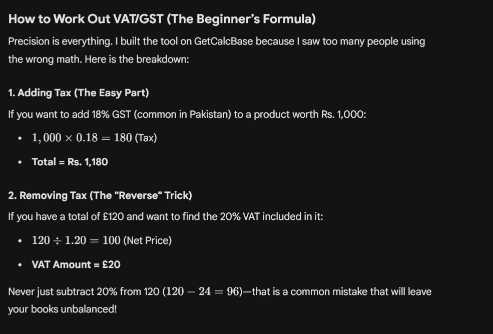
1. Adding Tax (The Easy Part)
If you want to add 18% GST (common in Pakistan) to a product worth Rs. 1,000:
- $1,000 \times 0.18 = 180$ (Tax)
- Total = Rs. 1,180
2. Removing Tax (The “Reverse” Trick)
If you have a total of £120 and want to find the 20% VAT included in it:
- $120 \div 1.20 = 100$ (Net Price)
- VAT Amount = £20
Never just subtract 20% from 120 ($120 – 24 = 96$)—that is a common mistake that will leave your books unbalanced!
2026 Global Tax Landscape: Rates at a Glance
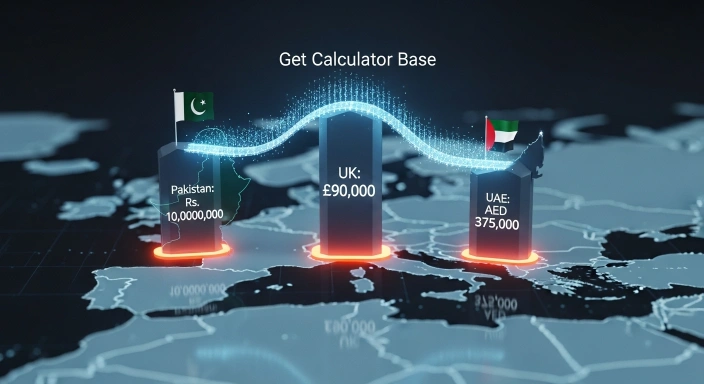
As of April 2026, tax authorities have updated several thresholds. Knowing these helps you realize when you actually need to register.
| Country | Standard Rate | Threshold for Registration |
| United Kingdom | 20% VAT | £90,000 (Rolling 12 months) |
| Pakistan | 18% GST | Rs. 10 Million (Goods) |
| New Zealand | 15% GST | NZD $60,000 |
| UAE | 5% VAT | AED 375,000 |
5 Critical Tips for VAT/GST Beginners
Based on my experience managing digital platforms and helping businesses with SEO and tools, here are five “Golden Rules”:
- Don’t Wait to Register if B2B: If your customers are other businesses, register early. They don’t care about the extra tax because they can claim it back, and it makes your business look more professional.
- Check for “Zero-Rated” Items: Some items, like basic food or books, have 0% tax. You still report them, but you don’t charge the customer. This is great for your vat tax refund calculator totals because you can still claim back the tax on your costs.
- Keep Digital Records: In 2026, most tax authorities (like HMRC with “Making Tax Digital”) require digital logs. Use a calculator with vat history features to keep a record of your daily calculations.
- Understand the “Tax Point”: The date on your invoice is usually the date the tax is “due,” even if the customer hasn’t paid you yet. Be careful with your cash flow!
- Use a Reliable Tool: Manual errors lead to penalties. Always use a verified vat calculation calculator to double-check your manual entries.
Common Myths About Tax Refunds
- Myth: “I can claim a refund on everything.”
- Fact: You can only claim a refund on items used exclusively for business. That fancy espresso machine for your kitchen? Probably not.
- Myth: “Refunds are automatic.”
- Fact: You must file a return. A vat refund calculator gives you the estimate, but the paperwork gets you the cash.
How GetCalcBase Simplifies Your Journey
I designed the Global VAT & GST Calculator to be the only sales tax calculator / vat calculator you’ll ever need. It’s built with the latest 2026 logic, supporting:
- Instant Reverse Calculation: Find the tax hidden in any price.
- Multi-Country Presets: No need to Google “What is the tax in UAE?”—it’s already in the dropdown.
- Calculation History: Perfect for when you are doing a batch of invoices and forget the last number.
Conclusion: Take Control of Your Tax Today
Taxes don’t have to be scary. Once you understand that you are simply a “collector” for the government, the pressure goes down. By using a vat tax refund calculator and keeping accurate records, you can actually save your business thousands of dollars every year in reclaims.
Ready to see how much you can save? Head over to our [Global VAT & GST Calculator] and get your numbers right in seconds.
Frequently Asked Questions (Beginner Edition)
1. When should I use a vat refund calculator?
Use it whenever you receive an invoice from a supplier and want to see how much “Input Tax” you can potentially claim back on your next tax return.
2. Is GST the same as Sales Tax?
Not exactly. GST is a multi-stage tax collected at every level of production, while Sales Tax is usually only collected at the final sale to the consumer.
3. What happens if I calculate my VAT wrong?
If you underpay, you might face penalties and interest. If you overpay, you are losing profit. That is why using a calculator with vat logic is essential for accuracy.
4. Can I claim a VAT refund if I am not registered?
Generally, no. You must be VAT-registered to reclaim the tax you’ve paid on business expenses.
Disclaimer: This guide is for educational purposes for beginners. Tax laws change frequently in 2026. Always consult a local tax professional before filing official documents.
Selling on Etsy involves more than listing products and receiving payments. Depending on where you sell, transaction fees, payment processing charges, and applicable VAT or GST can all affect your final earnings. Before setting product prices or calculating taxes, use our Etsy Calculator to estimate marketplace fees, then verify any applicable tax obligations with our VAT & GST Calculator for a more accurate view of your overall business costs.