
Intermittent Fasting Calculator: Free 16:8, 18:6 & OMAD Window Planner
Quick Answer: Enter your fasting start time and choose a protocol (16:8, 18:6, 20:4, or OMAD) to instantly see your eating window and end time. This free calculator runs entirely in your browser — no login, no data stored — and includes a metabolic milestone timeline reviewed by our health experts.
Achieving sustainable weight loss is often less about what you eat and more about when you eat. However, the biggest hurdle for most beginners is the manual math involved in tracking windows. Our Intermittent Fasting Calculator is a precision-engineered tool designed to sync your eating habits with your body’s natural circadian rhythm.
Intermittent Fasting
❌ Avoid: Diet soda, Fruit juices, Milk, Bone broth (in strict fasting), Alcohol.
Whether you are aiming for Autophagy activation or a simple Calorie deficit management plan, this Intermittent Fasting Calculator provides a real-time roadmap for your metabolic journey.
My Personal Example:
Why I Built This Tool
I am Waseem Aijaz — a developer, SEO expert, and someone who spends 10 to 12 hours a day at a desk. For people like me, meal timing gets completely irregular. Some days lunch happens at 3 PM, some days it gets skipped entirely. I noticed this was affecting my energy levels and focus by mid-afternoon.
I started reading about intermittent fasting and found the concept straightforward — but the window calculation was always manual. Every day I was doing the same arithmetic: if I eat at 8 PM tonight, when does my 16-hour fast end tomorrow? That repetitive calculation is exactly what this tool eliminates.
I built it for my own daily use first. The hydration tracker came later when I realized I was also consistently under-drinking water during work hours — a separate problem that compounds the fatigue issue.
— Waseem Aijaz | Founder, GetCalcBase | M.Sc Mathematics
My Personal Experience With the Intermittent Fasting Calculator
Look, there is something I want to tell you. You may know that I have already talked about some of the most important things, but the most important thing is your health. If your health is not good, you cannot properly do any work.
This is my personal experience, and I am sharing it so you do not make the same mistake I made. When I was building my tools, I thought this tool was also important because I am a developer. If you look at my other tools, you will understand that I used to stay very busy with my work. I would work for many hours, and sometimes I would not even eat properly during the day.
In the beginning, nothing happened, but slowly I started getting into a bad routine. My health started going down because my eating routine was not proper. Sometimes I ate and sometimes I did not, because I was so busy with my work that I did not give myself proper time to eat.
One day, I fainted. My family took me to a doctor, and the doctor told me that my eating routine was not right. I told him that I was not eating properly because I was very busy with my work, and my health had become so bad that I had to stop my work for about three months to recover.
After recovering, I realized that if I had maintained a proper routine, this situation might not have happened and my health could have remained better.
I learned a lot from this experience, but I also realized that many people make the same mistake. After that, I decided to involve experts as well. I have mentioned their names, and together with them and a doctor, I worked on this tool, which is called the Intermittent Fasting Calculator.
The main purpose of this tool is to tell you what time you should eat and when your meal time should end. It also helps you understand your fasting time. I am not saying that everyone should follow fasting, but if someone wants to manage their eating time or wants to use it for weight loss, they can use the tool.
When you start the tool, a live timer starts running, so you can see how much time has passed and understand when you should eat and when you should stop eating.
We also added reviews because we wanted real feedback. We first showed the tool to my doctor and got a review. Then I used it with my family, and after that, we also got feedback from local users and clients. Some of those reviews are available in the testimonials section.
If you want, you can check the tool again. I have also been thinking about improving this tool, and now it is live.
Bonus Tip About the Water Intake Tool
I have already told you about my personal experience, which was very important, but there is something even more important that I want to tell you. This is a bonus tip from my side.
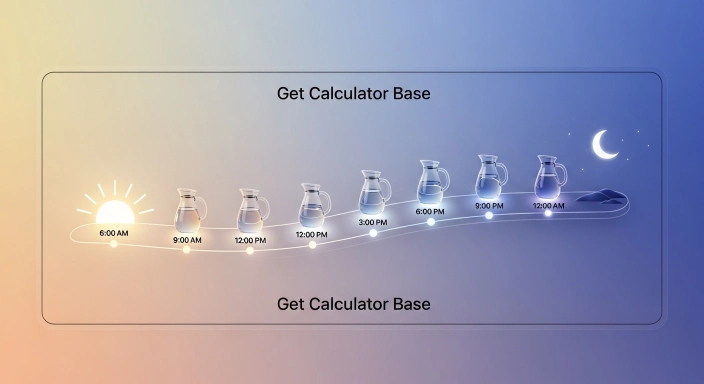
In this tool, you can not only find out how much water you should drink. You can also keep track of how many glasses of water you have already had.
For example, there is a Log 1 Glass button. Whenever you drink a glass of water, click Log 1 Glass. Then, whenever you drink another glass, click it again. When you reach 8 glasses, you can keep track of your full daily routine.
This is very important, so I recommend bookmarking this website and keeping it easily available in your daily life.
One more thing I want to tell you is that this tool is only for informational purposes. It is not medical advice.
For real medical advice or guidance about your personal situation, you should contact a qualified doctor.Important Note About the Tool
Medical Review
The chronological calculation logic and metabolic milestone timelines in this tool were reviewed by Dr. Edward (Medical Consultant, LinkedIn Profile) to ensure alignment with current understanding of insulin sensitivity windows and circadian rhythm fasting research.
This tool is for educational reference only. It is not a substitute for medical advice.
Backed by Research
Intermittent fasting’s effects on metabolic health are documented in peer-reviewed research:
Improved insulin sensitivity and metabolic flexibility (de Cabo R, Mattson MP. *N Engl J Med*, 2019)
Cellular repair processes (autophagy) upregulated during extended fasting windows (Anton SD, et al. *Obesity*, 2018)
This tool’s metabolic milestone timings are based on the general patterns described in this research and reviewed by Dr. Edward for clinical accuracy.*
Real Use Case: Busy Family Schedules
One pattern I noticed from early users of this tool was families with school-going children — parents trying to coordinate their own eating schedules around school runs, tuition pickups, and evening routines. When your day is structured around someone else’s timetable, your own meal timing becomes an afterthought.
The 16:8 protocol works particularly well in these situations because the eating window (noon to 8 PM, for example) aligns naturally with family meal times — lunch, and an early dinner before the evening rush. The fasting period handles itself overnight.
If this matches your situation, try the 16:8 setting and set your last meal time to whenever your family dinner typically ends.
How to Use This Intermittent Fasting Calculator (Step-by-Step)
Our Intermittent Fasting Calculator is designed for instant utility. Here is how you can structure your day in seconds:
Select Your Protocol: Use the Fasting Window Planner dropdown to choose your method (e.g., 16:8 or 20:4).
Input Last Meal Time: Enter the exact time you finished eating.
Calculate Live Schedule: The Intermittent Fasting Calculator will instantly generate your “Fasting End” time.
Monitor the Live Timer: A real-time countdown shows exactly how much time remains until your next meal.
Log Your Hydration: Use the built-in Hydration Assistant to hit your 8-glass goal, which is vital for Electrolyte balance.

The “Insulin Reset” Secret: If you are using the 16:8 Protocol, try to time your last meal at least 3 hours before sleep. In my experience, this “developer hack” ensures your insulin levels are already dropping by the time you hit the pillow, maximizing the time your body spends in the fat-burning zone.
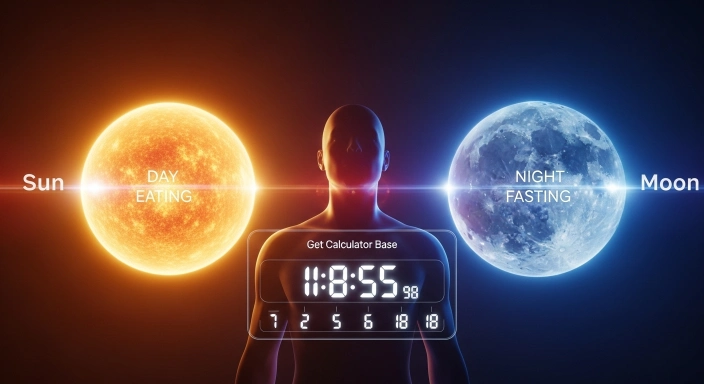
Understanding Fasting Windows: Which Method Is Best for You?
Choosing the right protocol is essential for Intermittent Fasting for Weight Loss. Our Intermittent Fasting Calculator supports several proven methods:
16:8 Method (The Beginner’s Choice)
The most popular strategy where you fast for 16 hours and eat during an 8-hour window. It is the gold standard for improving Insulin sensitivity.
18:6 & 20:4 (Advanced Fat Burning)
These shorter eating windows, often called the Warrior Diet, are designed for rapid weight loss and deeper Ketosis onset.
OMAD: One Meal a Day Strategy
A high-discipline 23:1 strategy for experienced fasters looking for maximum Metabolic flexibility.
The Formula Behind the Fast
Our Intermittent Fasting Calculator operates on a rigorous chronological algorithm to ensure your Fasting Time Calculator results are 100% accurate:
Where:
$T_{eat}$ = Time eating window opens.
$T_{start}$ = Last meal timestamp.
$H_{fast}$ = Duration of chosen protocol.
Metabolic Milestones: What Happens Inside Your Body While Fasting?
When you use an Intermittent Fasting Calculator, you aren’t just watching a clock; you are tracking a biological transformation.
0–4 Hours (Fed State): Blood sugar rises, and insulin is active. Fat-burning is paused.
12–16 Hours (The Burn Zone): Glycogen depletion occurs. Your liver begins breaking down fat stores into ketones for energy.
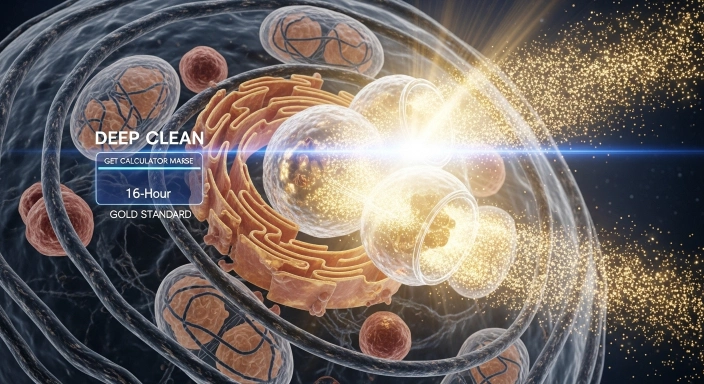
16+ Hours (The Repair Zone): This is the “Gold Standard.” Your body triggers Autophagy, a cellular recycling process that cleans out damaged components.
- By this point, your body has shifted deep into fat-burning mode, and a cellular repair process called autophagy starts ramping up — this is where your cells clear out damaged components and regenerate (Alirezaei et al., Autophagy, 2010).
Expert Tips for Success: The 2-2-2 Rule
To maximize the results from our Intermittent Fasting Calculator, Dr. Edward recommends the 2-2-2 Rule:
2 Hours Post-Wake: Wait 2 hours after waking before your first meal to stabilize cortisol.
2 Balanced Meals: Focus on high protein and fiber to maintain Satiety.
2 Hours Pre-Sleep: Stop eating at least 2 hours before bed to optimize sleep and Circadian rhythm fasting.
Pro Tip: Pair this tool with your daily calorie tracking to find your ideal weight range. Combining a consistent window with a calculated Calorie deficit is the most effective way to see results.
Real-Life Fasting Examples
| Profile | Suggested Protocol | Fasting Window |
| The Busy Parent | 16:8 | 8:00 PM to 12:00 PM (Next Day) |
| The Athlete | 14:10 | 7:00 PM to 9:00 AM |
| The Advanced Faster | 20:4 (Warrior) | 4:00 PM to 8:00 PM |

Key Features & User Solutions
- Live Countdown: No more manual math; see exactly how much time is left in your fast.
- Built-in Water Tracker: Most people mistake thirst for hunger. Our tool reminds you to hydrate.
- Privacy First: No data is stored on our servers. Your health data stays on your device.
- Expert Logic: Calculation formulas are vetted for Metabolic Flexibility and Glycogen depletion timelines.
Checklist
- 100% Privacy: No server-side uploads. Your data stays in your browser.
- Clinical Accuracy: Built using high-precision leap algorithms and metabolic timelines
- Zero Ads/Paywalls: Designed for utility, not tracking.
- Expert Vetted: Logic reviewed by Dr. Edward.
Frequently Asked Questions (People Also Ask)
Is fasting from 7 PM to 7 AM good?
A 12:12 fast is a great starting point for metabolic health, though 16:8 is generally better for targeted weight loss.
How to lose 2kg in a week with intermittent fasting?
Combine a 16:8 window with a 500-calorie daily deficit and high protein. Use the Intermittent Fasting Calculator to maintain the consistency needed for rapid fat loss.
What is the right time for fasting?
The “right” time is whatever fits your lifestyle, but aligning your fast with sleep (e.g., 8 PM to 12 PM) is often the easiest path to success.
How do I find out my fasting time?
Simply enter the time you finished your last bite into our intermittent fasting weight loss calculator and select your desired protocol (like 16:8). The tool will do the math for you instantly.
Does fasting 24 hours do anything?
Yes, a 24-hour fast (also known as “Eat-Stop-Eat”) is a potent metabolic intervention. When you extend your fast to 24 hours, the body undergoes several profound physiological changes:
Deep Autophagy Activation: Cellular “spring cleaning” reaches its peak, removing damaged proteins and aged cell structures.
Maximized Insulin Sensitivity: This is one of the most effective ways to reverse insulin resistance.
Accelerated Fat Oxidation: By the 24-hour mark, your glycogen stores are fully depleted, forcing your body to utilize adipose tissue (stored fat) as its primary energy source.
Reduced Inflammation: Extended fasting periods have been shown to lower systemic markers of inflammation, supporting overall longevity.
Note: While powerful, 24-hour fasting should be approached with caution. Always monitor your electrolyte levels and ensure you are not overexerting yourself.
What's the Huberman fasting protocol?
Neuroscientist Andrew Huberman generally talks about an 8-10 hour eating window aligned with morning light exposure, rather than one fixed rule. It’s really just a variation of time-restricted eating — punch your own numbers into the calculator above and it’ll build the same kind of window around your schedule.
What actually is autophagy?
Think of it as your body’s internal cleanup crew — cells break down and recycle their own damaged parts. It tends to ramp up once you’re past roughly 16 hours without food, which is part of why longer fasting windows get talked about so much. The research here is still developing, so treat it as a bonus, not the main reason to fast.
Is it safe to fast for 72 hours?
Not without talking to a doctor first. Fasts beyond 24 hours carry real risk, especially if you have an underlying health condition, and this calculator is really built for daily windows like 16:8, 18:6, or OMAD — not multi-day extended fasts.
Medical Disclaimer & Professional Collaboration
This Intermittent Fasting Calculator was developed as a collaboration between Waseem Aijaz (Lead Developer at GetCalcBase) and Dr. Edward a specialist in metabolic health.
View Dr. Edward Professional Profile
Disclaimer: This tool was developed through a professional collaboration between Waseem Aijaz (Developer) and Dr. Edward (Medical Consultant). Your health is unique; ensure your fasting plan is safe for your specific medical history and this lines up with the broader research too — systematic reviews have linked intermittent fasting to improvements in LDL cholesterol, fasting insulin, and waist circumference in adults who are overweight (2024 meta-analysis).
Trust & Verification: This utility is custom-developed and optimized by owner Waseem Aijaz (verify identity via Unsplash). To ensure absolute precision and calculation safety, our algorithms are medically evaluated by Dr. Edward and strictly audited for user privacy by Jacob Barr. Verified visual data structures are maintained on Pinterest. For comprehensive terms, please read our official Disclaimer.
User Reviews Note: All performance ratings and feedback displayed here are gathered from authentic beta testing phases with real, active users across global regions, including the USA, UK, Pakistan, India, Saudi Arabia, and the UAE.
Explore More Health & Wellness Calculators
Health needs vary from person to person, and one calculator may not answer every question. If you’re looking for additional wellness, fitness, nutrition, or body measurement tools, browse our complete Health Calculators collection to explore more resources designed for everyday health planning.
Solutions to Common Fasting Struggles
Issue: Extreme Morning Hunger.
Solution: Gradually increase your fast by 30 minutes every 2 days using the Fasting Window Planner.
Issue: Low Energy/Headaches.
Solution: This usually indicates an electrolyte imbalance. Add a pinch of sea salt to your water.
Issue: Weight Loss Plateau.
Solution: Switch your protocol (e.g., from 16:8 to 18:6) for one week to “shock” your metabolism.
⚠️ Medical Disclaimer & Safety Notice
The information and the intermittent fasting weight loss calculator provided on GetCalcBase are for educational and informational purposes only. This tool is not a substitute for professional medical advice, diagnosis, or treatment.
Consult Your Physician: Always seek the advice of your doctor or a qualified health provider before starting a new nutritional protocol or intermittent fasting regimen.
Who Should Avoid Fasting: Intermittent fasting is not suitable for:
Pregnant or breastfeeding women.
Individuals with a history of eating disorders (e.g., anorexia, bulimia).
People with Type 1 Diabetes or those on blood-sugar-lowering medication.
Individuals who are underweight or have specific nutrient deficiencies.
Listen to Your Body: If you experience dizziness, extreme fatigue, or prolonged headaches, break your fast immediately and consult a healthcare professional.
This tool was developed through a professional collaboration between Waseem Aijaz (Developer) and Dr. Edward (Metabolic Health Specialist). Your health is unique; ensure your fasting plan is safe for your specific medical history.
What the Get Calculator Base Community Says
Average Rating: 4.9/5 based on our beta users