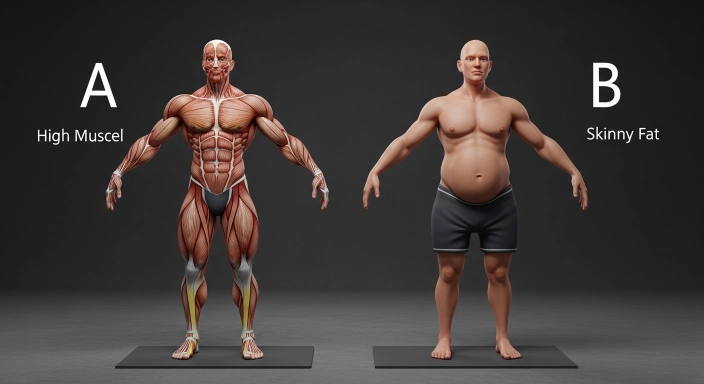

Macro Calculator for Weight Loss: Protein, Carbs & Fat Targets With Climate Adjustment
Quick Answer: Enter your age, weight, height, activity level, and climate to get your daily protein, carb, and fat targets. This calculator uniquely adjusts for hot or cold climates — a factor most macro calculators ignore — using the Mifflin-St Jeor formula.
If you’re struggling to lose fat, the problem usually isn’t your willpower — it’s your math. Most people focus only on calories, but how many macros should I eat to lose weight? is the question that actually changes your body composition. At GetCalcBase, we built a Precision Macro Calculator that goes beyond basic calorie math to give you a real roadmap for your transformation.
Precision Macro Calculator
Advanced Algorithmic Nutrition Guide
Precision Macro Calculator — Age, gender, weight (kg), height (cm), daily activity level, weather/climate, and your main goal (fat loss, maintain, or muscle bulk). Enter your details and click Analyze My Data.
Whether you want custom macro targets as a beginner or you’re an athlete needing a reliable protein calculator for muscle preservation, this tool is built to solve your specific problem. No more guessing. No more plateaus. Just numbers you can act on.
Who This Calculator Is Built For
Three groups of people consistently get the most from this tool:
People who have tried “eating less” without results. The most common reason calorie restriction stops working is that the baseline calculation was wrong from the start — usually because activity level was overestimated or climate was ignored entirely. This tool accounts for both.
Beginners who do not know where to start. If you have never tracked macros before, the numbers this tool gives you — grams of protein, carbs, and fat per day — are a concrete starting point. You do not need to understand the formula; you just need the output.
People who have hit a plateau. After several weeks of a deficit, your body weight changes, which means your TDEE changes. Most people forget to recalculate. Use this tool every 4 weeks to update your numbers based on your current weight.
One thing this tool does that most macro calculators do not: it adjusts for climate. If you live in a hot or cold environment, your body burns more energy for thermoregulation. This is a real metabolic factor that most free tools completely ignore.
Look, I want to share another personal experience with you.
Look, I want to share another personal experience with you. Whenever I visit a website or use an online tool, I like to understand what is missing, what could be improved, and whether I can provide a better solution.
This is how I approached the Macro Calculator.
I knew that many macro calculators were already available on Google and Bing. I also knew that some tools provided useful information, while others were missing certain features. I wanted to understand what I could do differently and how I could make a tool that would be useful to people.
As I explained earlier, I had already worked on tools related to body fat, intermittent fasting, and calorie calculations. While working on those tools, I learned more about these topics and realized that I could also build a tool that brought important information about macronutrients together in one place.
That is why I created the Macro Calculator.
When you use this tool, you can select your main goal, such as:
Fat Loss | Maintain | Muscle Bulk
The tool also asks for information about your body and routine so it can calculate your estimated daily needs. It provides results such as:
BMR (Resting): An estimate of the energy your body uses at rest.
TDEE (Daily Needs): An estimate of your total daily energy expenditure.
Protein: Your estimated daily protein requirement.
Carbs: Your estimated daily carbohydrate requirement.
Fats: Your estimated daily fat requirement.
The results are calculated based on the information you enter and the options you select. If you enter incorrect information, the results may not be accurate, so it is important to enter your details carefully.
I originally built this tool for myself and my family because I wanted to understand these things more clearly. Later, I decided to make it available to other people who might also find it useful.
I have also worked on related tools, including the Intermittent Fasting Calculator, Calorie Calculator, and Age Calculator. I am sharing these with you because I want you to understand the experience behind my tools and why I created them, rather than simply giving you a list of calculators without any explanation.
Remember, the Macro Calculator is only for informational and educational purposes. Its results are estimates, not medical or nutritional advice. If you have specific health concerns or need a personalized diet plan, consult a qualified healthcare professional.
A small but important tip from my side:
At least try the tools you recommend to others and guide them based on your own experience. Also, don’t just create a tool; provide useful information about it because many websites offer similar tools. I also recommend getting reviews from local users and users in different cities. Add their testimonials to your website so visitors can read them and see what people think about your tool.
Expert Tips from Our Collaborators
Dr. Edward’s Advice on Fat Loss:
“Metabolism is adaptive. If you stay in a steep deficit for too long, your body will slow down its energy expenditure. Use this calculator to find your starting point, but remember to recalculate every 4-6 weeks to account for your new body weight and metabolic rate.”
Jacob Barr’s Insight on Data Accuracy:
“Consistency is more important than perfection. When inputting your data, be honest about your activity level. Most users overestimate their daily movement, which leads to calorie targets that are too high for effective fat loss.”
Why I Added the Climate Variable
I am Waseem Aijaz, developer and founder of GetCalcBase. When I was building this tool, I noticed that every macro calculator I tested assumed a temperate climate. None of them adjusted for heat or cold.
This bothered me because the metabolic effect of climate is real and measurable. In extreme cold, your body increases thermogenesis to maintain core temperature — burning extra calories in the process. In extreme heat, your cardiovascular system works harder to cool you down, which also increases energy expenditure. The difference can be 5-10% of your total TDEE.
For someone in Lahore in July versus someone in London in January, this is not a small rounding error — it is a meaningful difference in daily calorie burn. So I built it in.
The climate multiplier in this tool adds a coefficient of 1.03x to 1.05x to your TDEE in extreme temperature conditions. It is not a large adjustment, but it is an honest one — and it makes this tool more accurate than calculators that ignore it entirely.
— Waseem Aijaz | Founder, GetCalcBase | M.Sc Mathematics
Why Most Weight Loss Calculators Fail (And Why Ours Is Different)
As a WordPress developer and SEO expert, I’ve spent years studying how digital tools interact with real human needs. My own interest in fitness taught me one hard truth: most online macro calculators are too generic. They treat someone in the cold streets of London the same as someone in the humid heat of Lahore — as if climate has zero effect on the body.

Our macro calculator for weight loss is different because it factors in environmental conditions directly. Did you know your heart rate and metabolic rate shift based on temperature? In extreme cold, your body burns more energy to stay warm; in extreme heat, your heart works harder just to cool you down. We’ve built this climate multiplier into the calculation so your TDEE estimate reflects where you actually live, not just a generic global average.
Before calculating protein, carbohydrate, and fat targets, it is important to know your daily calorie requirement. Your macro distribution is calculated from your total calorie intake, making our Calorie Calculator a useful first step before creating a personalised macronutrient plan.
Understanding the Science: How to Calculate Macros for Weight Loss Effectively
To find the best protein ratio for fat loss, you first need your Basal Metabolic Rate (BMR) — the energy your body burns just to stay alive. Our tool uses the Mifflin-St Jeor Equation, widely regarded as the most reliable formula for estimating resting energy expenditure in healthy adults.
But losing weight isn’t only about eating less. It’s about calorie deficit sustainability. Cut too hard, and your lean body mass (muscle) starts disappearing along with the fat — which is the opposite of what most people actually want. Our tool accounts for this by prioritizing protein in Fat Loss mode, which also helps through the Thermic Effect of Food (TEF): protein simply costs your body more energy to digest than carbs or fat.
A note on protein specifically: many calculators set your protein target purely off total body weight, which can push the number unnecessarily high if you’re carrying significant fat to lose. A more precise approach — one used by leading strength and nutrition coaches — bases protein on your lean body mass (body weight minus fat) when that data is available, and on your target body weight otherwise. This avoids overshooting protein at the expense of the carbs and fats your training and hormones also need.
The Perfect Macro Split: Balancing Protein, Carbs, and Fats for Fat Loss
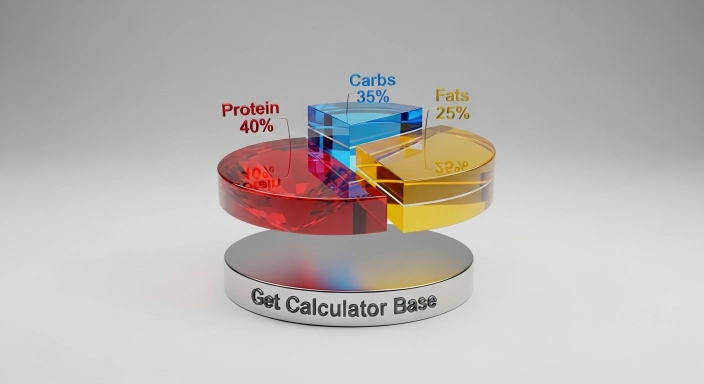
There’s no single “one size fits all” split in dieting. That said, for most people searching for a macro calculator for weight loss — whether male or female — a 40/35/25 split (Protein/Carbs/Fats) is a strong starting point:
- Protein (40%) — essential for muscle preservation and keeping you full
- Carbs (35%) — fuel for your brain and your workouts
- Fats (25%) — vital for hormone health and vitamin absorption
Our tool lets you adjust these ratios directly. If you’re grabbing a quick lunch out, you can use these numbers to plan a meal — like knowing exactly how many grams you have left for the day before ordering a burrito bowl.
Comparison: Standard Dieting vs. Flexible Dieting (IIFYM)
| Feature | Standard “Clean” Dieting | Flexible Dieting (GetCalcBase Method) |
|---|---|---|
| Food Choice | Restricted to “healthy” foods only | Any food that fits your macros |
| Sustainability | Low — hard to stay consistent | High — enjoy pizza and still lose fat |
| Social Life | Difficult | Much easier |
| Result Focus | Weight only | Body composition & muscle |
| Mental Health | Higher stress and guilt | More freedom and control |
Macros vs Calories: What Is The Difference?
Macros vs Calories: Which Should You Track?
Calories tell you how much energy you are consuming. Macros tell you where that energy is coming from — protein, carbohydrates, or fat.
Tracking only calories works for weight change (up or down), but it does not control body composition. Two people eating 1,800 calories per day — one getting 180g of protein and the other getting 60g — will have very different outcomes in terms of muscle retention and fat loss, even at the same calorie level.
Tracking macros is more precise and more useful if your goal is fat loss while maintaining muscle. It requires slightly more effort than counting only calories, but the results are meaningfully better over a 12-week period.
If you are new to tracking, start with total calories for the first two weeks to build the habit. Then add protein tracking specifically — hitting your protein target is the single most impactful macro adjustment for fat loss. Carbs and fats can be more flexible once protein is consistently on target.
Step-by-Step Guide: How to Use the GetCalcBase Macro Tool
Using our tool is simple, fast, and secure. Follow these steps to get your results in seconds:
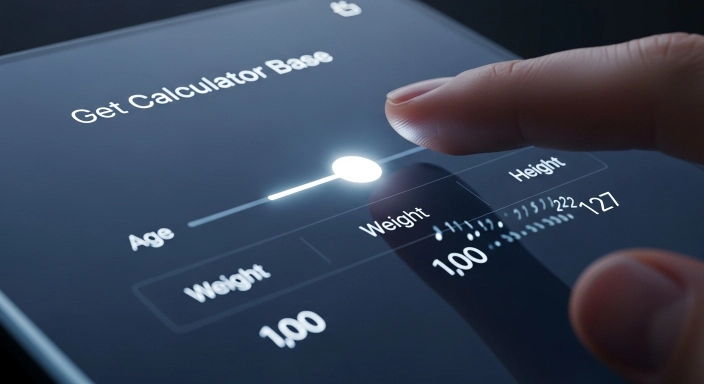
- Enter Personal Stats: Move the sliders for your Age, Weight (kg), and Height (cm).
- Select Gender: Choose Male or Female (this changes the BMR formula logic).
- Activity & Climate: Choose your daily movement level and your current weather. (Hot/Cold environments affect your burn rate!).
- Pick Your Goal: Select Fat Loss, Maintain, or Muscle Bulk.
- Analyze: Click "Analyze My Data" to see your BMR (Resting), TDEE (Daily Needs), and your specific gram targets.
Pro tips:
- Don’t skip the climate setting. Extreme heat or cold can shift your caloric burn by 5–10% due to thermoregulation — one of the few factors most calculators ignore entirely.
- Double-check your gender selection. The Mifflin-St Jeor formula uses different constants for men and women, so this directly affects your baseline BMR accuracy.
The Mathematics of Metabolism: Our Scientific Formula
Our Precision Macro Calculator doesn’t use guesswork. It is built on the Mifflin-St Jeor Equation, which clinical research has proven to be the most accurate method for predicting resting energy expenditure in healthy individuals.
1. The Core Calculation (BMR)
The algorithm first determines your Basal Metabolic Rate (BMR) using your physiological data:
For Men:
$$10 \times \text{weight (kg)} + 6.25 \times \text{height (cm)} – 5 \times \text{age (y)} + 5$$For Women:
$$10 \times \text{weight (kg)} + 6.25 \times \text{height (cm)} – 5 \times \text{age (y)} – 161$$
2. Environmental & Activity Integration (TDEE)
Unlike standard calculators, our tool applies a multi-vector approach to find your Total Daily Energy Expenditure (TDEE). We multiply your BMR by:
Physical Activity Level (PAL): Ranging from 1.2 (Sedentary) to 1.9 (Extreme Athlete).
Thermic Effect of Environment: We add a climate coefficient (1.03x to 1.05x) to account for metabolic shifts in extreme heat or cold.
3. Macro Partitioning Logic
Once the calories are set, the tool applies a goal-specific percentage:
Fat Loss: 40% Protein | 35% Carbs | 25% Fats (Prioritizing muscle preservation).
Maintenance: 30% Protein | 40% Carbs | 30% Fats (Balanced hormonal health).
Muscle Bulk: 30% Protein | 50% Carbs | 20% Fats (Fueling hypertrophy).
Common Macro Mistakes That Stop You from Losing Fat
- Overestimating Activity: Most people think they are "Active" when they are actually "Sedentary." Be honest for better results.
- Ignoring Liquid Calories: Sodas and oils count!
- Not Adjusting: As you lose weight, your TDEE drops. Use our tool every 4 weeks to update your numbers.
- Fearing Carbs: Carbs aren't the enemy; an unmanaged surplus is.
The 80/20 Rule Checklist for Long-Term Success
- 80% Whole Foods: Lean meats, eggs, rice, potatoes, fruits, and veggies.
- 20% "Soul" Foods: A slice of pizza, a cookie, or your favorite treat.
- Hydration: Drink at least 3-4 liters of water daily.
- Sleep: Aim for 7-8 hours to avoid metabolic adaptation issues.
- Consistency: Hit your macros within a +/- 5g range every day.
Frequently Asked Questions (FAQs)
What is the best macro ratio for weight loss?
A 40/35/25 split (Protein/Carbs/Fat) is a well-researched starting point for fat loss. The high protein percentage (40%) helps preserve lean muscle mass during a calorie deficit, which prevents metabolic slowdown. The carbohydrate allocation (35%) maintains energy for training and brain function. These ratios are a starting point — individual responses vary and adjustments may be needed after 4–6 weeks.
How often should I recalculate my macros?
Every 4 weeks, or whenever your weight changes by 3–5 kg. As you lose weight, your BMR decreases because there is less body mass to maintain. Failing to recalculate means your calorie target becomes less accurate over time — often explaining why progress stalls after the first few weeks.
Can I eat "junk food" if it fits my macros?
Yes — this is the basis of Flexible Dieting (IIFYM: If It Fits Your Macros). Research consistently shows that total calorie and macronutrient balance matters more than food source for body composition. However, micronutrient density, fiber, and satiety all favor whole foods for the majority of your intake. The 80/20 approach — 80% whole foods, 20% flexible — is a practical balance.
Why am I not losing weight even if I hit my macros?
This is often due to metabolic adaptation or underestimating your activity level. Ensure you select “Sedentary” if you have a desk job.
Is a high-protein diet necessary for fat loss?
Yes. Protein has a high Thermic Effect of Food (TEF) and protects your muscles during a calorie deficit.
The GetCalcBase Advantage: Worldwide, Free, and Always Updated
- No login, no fees — health data tools should be free, so use it as often as you need.
- Global access — whether you’re in the USA, UAE, UK, Canada, Pakistan, or India, the climate and regional logic adjusts for you.
- Weekly updates — new tools added regularly to solve everyday problems.
- Privacy-first — your data is processed in your browser. We don’t store your personal health stats on our servers.
A few more pro tips:
- Protein is non-negotiable. Most weight loss journeys stall because of muscle loss, not fat-loss failure. Hit your protein target first, and let the rest follow.
- Find maintenance first. Don’t jump straight into a large deficit. Use the calculator to find your maintenance calories, then drop by 200–300. Slow, steady adjustments beat a crash approach almost every time.
- Trust the process for two weeks. If you’re eyeballing portions, you’re likely off by around 20%. Use the calculator’s precise targets consistently for at least two weeks before judging whether it’s working.
Explore More Health & Wellness Calculators
Health needs vary from person to person, and one calculator may not answer every question. If you’re looking for additional wellness, fitness, nutrition, or body measurement tools, browse our complete Health Calculators collection to explore more resources designed for everyday health planning.
Expert Collaboration & Medical Disclaimer
Scientific Audit & Collaboration
The logic and algorithmic accuracy of the GetCalcBase Macro Calculator have been developed and audited in collaboration with leading experts in metabolic health and human performance:
Dr. Edward D. Sadler: A specialist in metabolic health and nutritional science. Dr. Sadler provided the clinical insights necessary to ensure our calorie deficits are safe and sustainable for long-term health.
Jacob Barr (Health Systems Expert): View LinkedIn Profile. Jacob’s expertise in health systems ensures our data processing aligns with modern health standards.
Professional Guidance Disclaimer
While our tool utilizes the gold-standard Mifflin-St Jeor formula and has been audited for accuracy, the results are intended for informational and educational purposes only.
Important Note: * Macronutrient needs can vary based on underlying medical conditions, hormonal health, and individual metabolic history.
The data provided by this tool should not be treated as medical advice or a formal prescription.
We strongly recommend consulting your personal physician or a registered dietitian before making significant changes to your diet or exercise intensity. This tool provides estimates based on validated formulas and is intended for educational and informational purposes only.
Trust & Verification: This utility is custom-developed and optimized by owner Waseem Aijaz (verify identity via Unsplash). To ensure absolute precision and calculation safety, our algorithms are medically evaluated by Dr. Edward and strictly audited for user privacy by Jacob Barr. Verified visual data structures are maintained on Pinterest. For comprehensive terms, please read our official Disclaimer.
User Reviews Note: All performance ratings and feedback displayed here are gathered from authentic beta testing phases with real, active users across global regions, including the USA, UK, Pakistan, India, Saudi Arabia, and the UAE.
What the Get Calculator Base Community Says
Average Rating: 4.9/5 based on our beta users