
The Science of TDEE: Why Your Environment Changes How You Burn Fat
This is my personal experience as a developer.
I created and supported these types of tools to help users get basic information and awareness — not to replace doctors or professional experts. One of the biggest mistakes people make is relying completely on online tools without consulting a healthcare professional.
Many users search on Google and start treating tools like they are full medical solutions, which is not correct. That is why we always clearly mention that these tools are only for informational and educational purposes.
Even though these tools are developed with research and expert guidance, we still do not claim that they are a replacement for real medical advice, diagnosis, or treatment.
The purpose of these tools is:
- To provide basic understanding
- To increase awareness
- To help users learn about their health or calculations
- To guide users before they consult a professional
I have personally seen users improve their understanding of food habits, body fat, nutrition, and other health-related topics after using these tools. Many users first learned basic information from the tools and then visited a doctor for proper guidance.
That is exactly the right way to use such tools — for awareness and learning, not as a final medical decision.
If anyone ever needs help or guidance related to a tool, they should always contact professionals or experts for accurate support.
Most fitness “gurus” tell you that a calorie is just a calorie. But if you have ever tried dieting in the freezing winter of London versus the scorching summer heat of Lahore, you know that your body reacts differently.
The truth is, your Total Daily Energy Expenditure (TDEE) isn’t a static number. It is a living, breathing calculation that shifts based on the world around you. At GetCalcBase, we realized that standard calculators were missing a massive piece of the puzzle: The Environment.
In this guide, we will explore the biological link between weather and weight loss, and I will give you 3 steps to control your environment and weight so you can stop fighting your biology and start working with it.
The Biological Link: How Climate Affects Metabolism
Your body has one primary job: to maintain a core temperature of approximately 37°C (98.6°F). This process is called Thermoregulation, and it requires energy (calories).
1. Cold Environments & Non-Shivering Thermogenesis
In a cold climate like the UK or Canada, your body must work harder to generate heat. This often activates Brown Adipose Tissue (BAT), also known as “good fat,” which burns calories specifically to create warmth. This means your Basal Metabolic Rate (BMR) can actually increase slightly in the cold.
2. Hot Environments & Cardiovascular Stress
In hot and humid climates like Pakistan or the Middle East, your body doesn’t burn calories to create heat—it burns them to get rid of it. Your heart rate increases to pump blood to the surface of your skin to cool you down. This metabolic adaptation can make high-intensity exercise feel much harder, often leading to quicker exhaustion.
3 Steps to Control Your Environment and Weight
To master your transformation, you need to account for your surroundings. Here is how you do it:
💡 My Expert Pro-Tips from 7 Years of Experience:
- The “Micro-Climate” Hack: I’ve found that sleeping in a cooler room (18-20°C) isn’t just about comfort; it subtly boosts your BMR through non-shivering thermogenesis. Use this technical edge to improve both sleep quality and fat loss.
- TEF in the Heat: High-protein diets have a high Thermic Effect of Food, which actually generates internal heat. If you’re in a heatwave, balance your protein with hydrating, water-rich carbs to keep your body from overheating.
- Scale Fluctuations: Don’t panic if the scale jumps 1kg during a sudden hot spell. As a developer who tracks data trends, I can tell you this is usually water retention for blood pressure regulation, not fat gain.
Step 1: Adjust Your Macro Ratios Based on Temperature
Your nutritional needs shift with the weather.
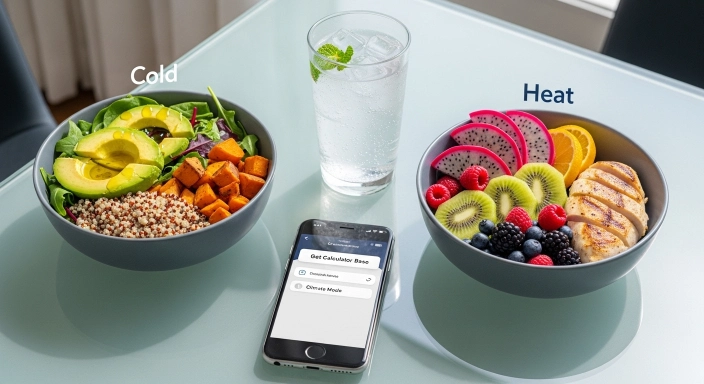
- In the cold, you might need slightly more healthy fats to support the high energy demands of staying warm.
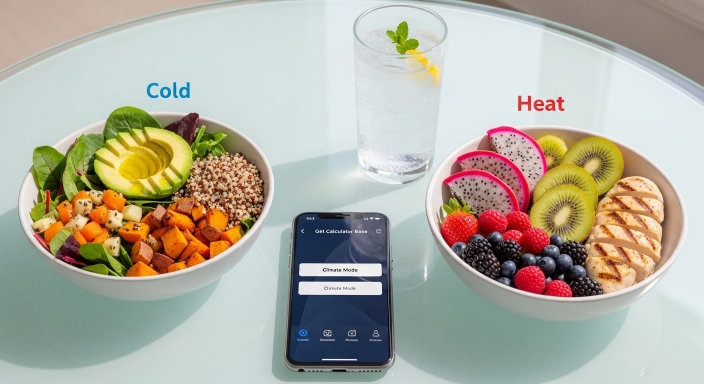
- In the Heat: You need to prioritize Nutritional balance and electrolytes. High-protein diets have a high Thermic Effect of Food (TEF), which generates internal heat. If you are in a 45°C heatwave, ensure you are balancing that protein with plenty of hydrating carbs.
Step 2: Use an Environment-Aware TDEE Tracker
Don’t use a generic calculator. Most tools use a simple activity multiplier that ignores where you live. Our Macro Calculator for Weight Loss at GetCalcBase is specifically coded to adjust your calorie targets based on whether you are in a “Cold,” “Hot,” or “Normal” environment. This ensures your calorie deficit sustainability remains intact regardless of the season.
Step 3: Optimize Your Immediate Surroundings
You can manipulate your “micro-climate” to aid fat loss.
- Sleep Cool: Research shows that sleeping in a cooler room (around 18-20°C) can improve sleep quality and subtly boost calorie burn.
- Time Your Workouts: In hot climates, exercise during the early morning or late evening to avoid excessive cardiovascular stress, which can lead to cortisol spikes and water retention.
The Hidden Danger: Metabolic Adaptation and Weather
When the seasons change, many people hit a plateau. They think their diet has stopped working, but often, it’s just that their TDEE tracking hasn’t accounted for the change in energy expenditure.
If you move from a physically active summer (walking outdoors) to a sedentary winter (staying indoors), your activity level drops, but your body’s need for heat increases. This is a delicate balance. Using a tool that understands lean body mass protection and environmental shifts is the only way to stay ahead of the curve.
Comparison: Weight Loss Challenges by Climate
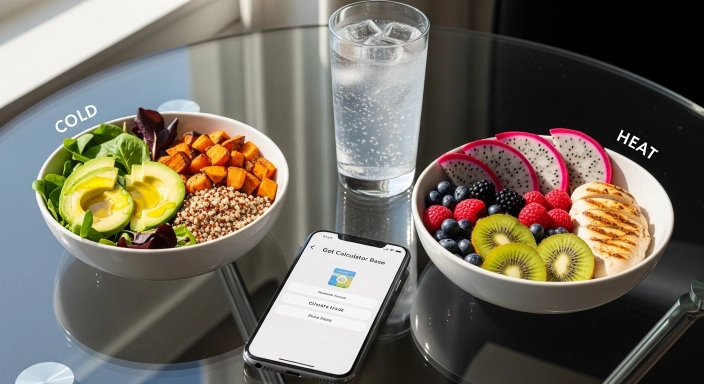
| Feature | Cold Climate (e.g., London) | Hot Climate (e.g., Lahore) |
| Main Challenge | Increased hunger (body wants energy for heat) | Dehydration & Heart Rate fatigue |
| Metabolic Shift | Activation of Brown Fat (BAT) | Increased sweat rate & electrolyte loss |
| Dietary Focus | Complex carbs & fats for warmth | Lean proteins & high-water content foods |
| Recommended Step | Use a protein calculator for muscle cover | Monitor heart rate during TDEE tracking |
Conclusion: Stop Guessing, Start Calculating
Your environment is a variable you cannot afford to ignore. Whether you are battling the winter blues or the summer sun, your macros must adapt. By following the 3 steps to control your environment and weight, you are moving from “guessing” to “precision.”
Ready to see how your local weather affects your numbers? Head over to our [Precision Macro Calculator] and select your climate to get your custom-tailored results today.
FAQs
Does being in the heat help you lose weight faster?
Not necessarily. While you lose “water weight” through sweat, the actual fat-burning process depends on your calorie deficit. Extreme heat can actually make it harder to maintain a high-intensity workout routine.
Why does my weight increase in the summer?
This is often due to water retention. In hot weather, your body holds onto fluids to help regulate your temperature and blood pressure.
Is it true that cold weather burnsmore calories?
Yes, but the difference is often small unless you are physically active in the cold. The body burns extra energy through shivering and brown fat activation to maintain your core temperature.