

Quick Answer: How Do I Know If My Password Was Leaked?
“The fastest way is to check your email at a breach-monitoring service like Have I Been Pwned — enter your address and it instantly shows every known breach it appeared in. If you find a match, or notice unfamiliar logins, password reset emails you didn’t request, or locked accounts, treat that password as compromised immediately and generate a new one below.”
Personal Experience:
As a bank worker, I often needed secure passwords for customer accounts. Earlier, I faced many problems because customers forgot their passwords or used weak, reused ones — which sometimes created real security issues. Once I started checking accounts against breach databases before issuing new credentials, the number of repeat incidents dropped sharply.
Before starting, I want to share my personal experience. I believe this tool can increase knowledge and help many users.
The tool I am talking about is the Random Password Generator, which is available at the link below. This tool is different from other tools because it allows users to generate strong and secure passwords instantly. You can create unlimited passwords based on your own choice and requirements.
As a bank worker, I often needed secure passwords for customer accounts. Earlier, I faced many problems because customers forgot their passwords or used weak ones, which sometimes created security issues.
This tool made everything much easier. Now, I can quickly generate strong passwords that are difficult to hack and easy to manage. It also helps users create secure passwords for different purposes, such as
- Bank accounts
- Social media accounts
- Websites
- Development projects
The best thing about this tool is that it creates strong, random, and secure passwords that are not easy to guess or break. It helps protect accounts and improves overall security.
I recommend using this tool to anyone who wants better password security and easier account management.
Imagine waking up to an email from your bank saying your account has been accessed from a different country. Or worse, finding out that your private photos or work emails are being sold on a dark web forum for less than the price of a cup of coffee.
In 2026, this isn’t just a “scary story”—it is a daily reality for millions. Data breaches have become so common that it’s no longer a question of if you will be hacked, but when. Most people are walking around with “digital targets” on their backs because they use the same three passwords for every site they own.
If you want to stop being a victim, you need a professional random password generator to create a wall between your life and the hackers. In this guide, I’ll show you how to check if you’ve already been leaked and why your brain is your worst enemy when it comes to security.
Data Breach Calculator: Estimate Cost & Business Risk Free
Let’s be honest. Most people think a cyber attack just means paying a hacker some ransom money and moving on. But if you run a business today, you know data isn’t just files — it’s your reputation.
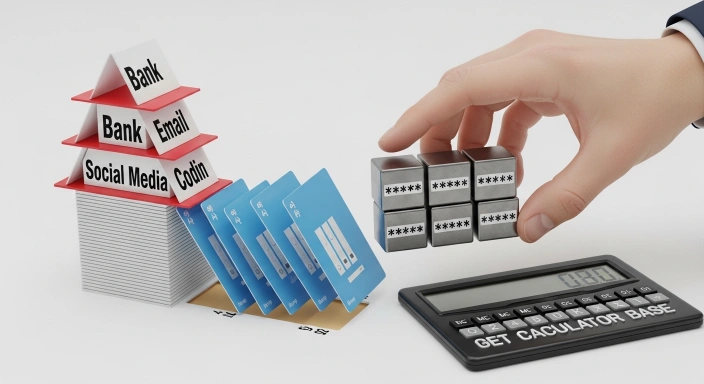
Global Data Breach Estimator
Select Target Country/Region: Global Average Display Result Currency: USD ($) Total Leaked Records: 5000 Cost Per Record (Editable): 165
[Run Financial Analysis]
I built this data breach cost calculator because I saw too many business owners guessing their financial risk instead of actually knowing it. Whether you run a growing e-commerce store in Lahore, a marketing agency in the UK, or a tech startup in the US, this tool shows you the real cost of a data leak before it actually happens — not after.
How to Use This Calculator (Without Tearing Your Hair Out)
I hate complicated tools. That’s why I built this estimator to be simple, with one strict rule: it’s privacy-first. Your data stays right on your screen — nothing is ever sent to our servers.
Here’s how you get your numbers:
- Pick your location. A hacked record in the US costs roughly $245 because of heavy lawsuits and regulatory fines, while local markets like Pakistan or India carry a different financial impact. Just pick where you do business.
- Select your currency. No one wants to convert USD in their head. Choose PKR, INR, GBP, SAR, AED, or whatever you use daily, and the tool displays every result in that currency.
- Enter your record count. How many user profiles, emails, or credit card details are currently sitting in your database?
- Hit calculate. The tool instantly breaks the financial damage down into real-world categories, not just one big scary number.
Understanding Your Results
When you click “Run Financial Analysis,” here’s what each result actually means for your business:
- Forensics & IT Recovery — the immediate “emergency room” cost. This is what you pay to find the backdoor, remove the attacker, and rebuild your systems.
- Legal Fees & Fines — the long-term “legal hangover.” This covers attorney fees for class-action lawsuits and penalties from regulators, including GDPR fines and HIPAA violations where applicable.
- Lost Customer Trust — often the most shocking number. This accounts for customer churn: the percentage of users who cancel their accounts or stop buying the moment they hear about the breach.
- Total Risk Exposure — your resilience target. This is the liquid capital you’d realistically need to survive the first 12 months after a breach.
Unique Features of the GetCalcBase Breach Estimator
Most calculators online show you a single fixed number based on US data alone. Here’s what sets this one apart:
- Dynamic Regional Benchmarking — instead of one global average, we apply specific per-record weights for the USA ($245), UK (£195), and South Asian markets like Pakistan (Rs. 60), so the estimate actually reflects where you operate.
- Live Currency Sync — no manual math. Results display natively in PKR, INR, AED, SAR, GBP, and more.
- Client-Side Privacy — the tool runs entirely in your browser’s JavaScript. Your sensitive company data is processed in your device’s memory and never touches our database or a lead-gen form.
- Fully Adjustable Cost Per Record — if your industry’s actual insurance data suggests a different figure, you can manually override it instead of being locked into a fixed input.
Signs Your Password May Already Be Leaked
- You get login alerts from a location or device you don’t recognize
- Password reset emails arrive that you never requested
- You’re suddenly locked out of an account you use regularly
- The same password appears in a breach-checking tool’s database
- Friends or contacts report receiving spam “from you” that you never sent
How to Check If Your Password Was Leaked (Step by Step)
- Check your email against a breach database — services like Have I Been Pwned are the industry-standard way to see which known breaches included your email address.
- Check reused passwords specifically — if you’ve ever reused a password across sites, treat every account using that password as at risk, not just the one that was breached.
- Generate a new, unique password immediately — use the Password Generator Tool above to create a strong, random replacement for any exposed account.
- Estimate your business exposure — if you manage customer data and suspect a breach, run the numbers through our Data Breach Calculator to understand the real financial risk.
What to Do the Moment You Confirm a Leak
- Change the leaked password immediately — never reuse it, even with minor variations
- Change it everywhere else you reused it
- Turn on two-factor authentication if you haven’t already
- Monitor the account closely for a few weeks for unusual activity
The Math: Where Do These Numbers Come From?
This isn’t a random number generator. The logic is built on 2024–2026 cybersecurity cost research, including patterns published in IBM’s annual Cost of a Data Breach Report.
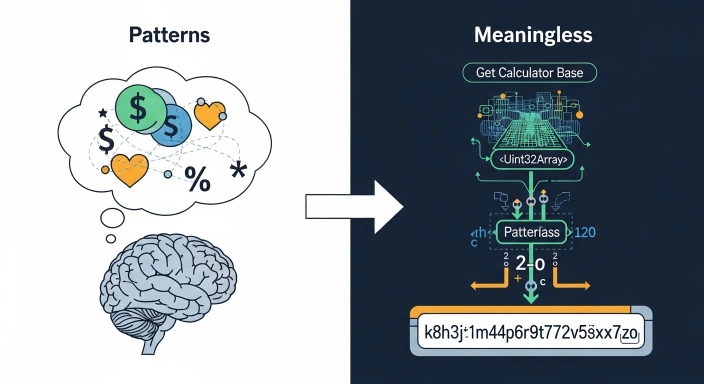
At its core, the tool multiplies your total records by the average cost per record for your region. The real detail is in the breakdown — here’s exactly where that money goes after a breach:
- IT Cleanup (30%) — goes to forensic experts and IT teams figuring out how the attacker got in and patching the gap.
- Lawyers and Fines (25%) — legal defense costs, plus regulatory penalties for losing customer data under laws like GDPR or HIPAA.
- Losing Your Customers (45%) — the silent killer. Nearly half of the total financial loss typically comes from people quietly abandoning your brand because they no longer trust you with their data.
Is This Tool Actually For You?
If you store any kind of customer data — even just names and email addresses for a newsletter list — this tool is for you. Small businesses often suffer the most from this kind of event. A meaningful share of small companies close down within six months of a major breach simply because they weren’t financially prepared for the sudden costs.
Why Use the GetCalcBase Estimator?
If you search around, you’ll find calculators from larger corporate platforms. Here’s why this one is built differently:
- Fresh Data — many existing tools still run on outdated 2021 benchmarks. This one uses updated 2026 figures.
- No Lead-Gen Wall — some well-known breach calculators make you submit your name, email, and company just to see a result. This one shows your number immediately, with nothing to fill out.
- Local Currency, Not Just USD — you’re not forced to mentally convert dollars into your own currency.
So, The Number Scared You. Now What?
If your estimated risk looks alarming, don’t panic — take a breath and start closing the gaps. Three things you can act on today:
- Delete old data. If you don’t need a file, remove it. An attacker can’t steal what no longer exists.
- Lock it down. Encrypt sensitive data. Even if it’s stolen, it stays unreadable without the key.
- Catch it early. Focus on your mean time to identify. Detecting a breach in 30 days instead of the industry-typical 200+ days can genuinely save six figures or more.
The Real Cost of a Hack in 2026
Things have shifted noticeably over the last few years. As of 2026, the global average cost of a data breach sits around $4.88 million. In the US, strict privacy laws and heavier litigation push that figure well past $10 million.
The growing problem right now is “shadow data” — old cloud backups, forgotten customer lists, or data quietly fed into local AI models that a company doesn’t even remember exists. When attackers find this kind of exposed data, it typically takes months to notice, and the longer a leak stays undetected, the more expensive it becomes to contain.
The Math Behind the Risk: Our 2026 Formula
This calculator isn’t a black box. It follows a defined mathematical model based on current cyber-risk research.
1. Baseline Calculation: Total Risk = Records × Cost Per Record (based on your selected region)
2. Financial Breakdown (based on typical incident patterns):
- Forensics & IT Recovery (30%) = Total × 0.30
- Legal Fees & Fines (25%) = Total × 0.25
- Lost Customer Trust & Churn (45%) = Total × 0.45
2026 Industry Risk Comparison
| Industry Sector | Risk Level | Data Sensitivity | Why the Cost Is High |
|---|---|---|---|
| Healthcare | Critical | Medical History (PHI) | Strict HIPAA fines and permanent data value |
| Banking & Finance | High | Financial Assets (PCI) | Heavy legal settlements and immediate fraud exposure |
| Retail & E-commerce | Medium | Emails & Addresses | High customer churn — people stop buying after a leak |
| SaaS & Tech | High | IP & User Credentials | Breach-of-contract lawsuits and loss of intellectual property |
Pre-Breach Safety Checklist (Are You Ready?)
Run through this before an incident happens. If you can check all four, your actual costs will likely land 30–40% lower than the calculator’s baseline estimate:
- Immutable backups — do you keep off-site backups an attacker can’t delete or encrypt?
- Zero-trust access — are employees limited to only the data their specific role requires?
- The 30-day goal — can your IT team detect and contain a breach in under 30 days?
- Cyber insurance policy — does your policy cover reputational loss, or just technical repair costs?
What the GetCalcBase Community Says
Users tell us the regional currency support is what they didn’t expect from a free tool — being able to see a result in PKR or INR directly, instead of converting USD manually, is consistently the most mentioned benefit. Others point to the instant, no-signup results as the main reason they came back to check numbers again for a second scenario.
Final Thoughts
Thinking about cybersecurity isn’t fun, but it’s necessary. I built this data breach calculator at GetCalcBase not to scare you, but to help you prepare. Once you see the actual numbers, it becomes a lot easier to justify spending a little on better security today, rather than paying a fortune to attackers — or lawyers — tomorrow.
A Quick Legal Disclaimer: This tool gives you a well-informed estimate based on global averages and recent breach cost research. Real-world costs vary depending on your specific industry, how quickly you respond to an incident, and local regulations. This isn’t official legal or financial advice. For a binding risk assessment, speak with a certified cybersecurity expert or an attorney.
Related Tools
- AI Token Calculator
- Aspect Ratio Calculator
- Redirect Checker Tool
- FIFA World Cup 2026 Countdown — Match Times Every Zone
- Password Generator Tool
- Data Storage Converter
- Image Load Time Calculator
Reviewed by Waseem Aijaz, WordPress developer and SEO specialist.
Frequently Asked Questions
Is it safe to generate passwords online?
Yes, but only if the tool is “Client-Side.” This means the random password generator works inside your browser and doesn’t send your password to a server. Our tool at GetCalcBase is 100% client-side.
Can a strong password still be hacked?
A strong password protects you from “Guessing” and “Brute-force.” However, it won’t protect you if you type it into a fake (phishing) website. Always check the URL!
What is the best password length for 2026?
We recommend at least 16 characters. For very sensitive accounts like banking or crypto, 20-25 characters is even better.
How does a random password generator create entropy?
It uses mathematical formulas ($E = L \times \log_2(R)$) to ensure that each character is chosen without any bias or pattern, making the final string unpredictable.