
Free Speed Converter: mph, km/h, m/s, Knots Instantly
Quick Answer: Enter any speed value to instantly convert between km/h, mph, knots, m/s, ft/s, and Mach — all six units update simultaneously in real time. No login required.
A student studying physics needs to convert 30 m/s to km/h for a problem set. A runner following an American training plan needs to know what 7.0 mph feels like in km/h on the treadmill. A pilot checking weather data needs to convert wind speed from knots to mph. A driver renting a car abroad needs to understand what 65 mph means in km/h.
Ultimate Speed Converter
High-precision conversion for automotive, weather, and aerospace engineering.
All four of these people need the same thing — a reliable, instant speed converter that handles the units they’re working with and gives accurate results without rounding errors or confusing interfaces.
This free speed converter supports six major speed units simultaneously: kilometers per hour (km/h), miles per hour (mph), knots (nautical miles per hour), meters per second (m/s), feet per second (ft/s), and Mach number at sea level. Enter any value in any unit and all five other values update instantly — no button to click, no page to reload.
No login required. No data stored. Works on every device.
My Personal Experience With the Speed Converter
This is another personal experience that may also be something other people have faced.
I created this tool, Free Speed Converter: mph, km/h, m/s, Knots Instantly, because I needed a speed converter myself.
The reason was simple. Sometimes I wanted to check my speed and convert it into different units. For example, if my speed was 100, I wanted to select Kilometers per Hour and see the equivalent values in:
Miles per Hour
Knots (Marine)
Meters/Second
Feet/Second
Mach (Sound)
This can be useful for understanding how fast something is moving. For example, if you are riding a bike or driving a car, you may want to understand its speed in different units.
I faced this problem myself, so I decided to create a tool that provides all these conversions in one place.
I also found that many other tools were not giving me all the information I wanted, so I built my own tool with these features. It is completely free to use.
Why I Built This Tool
As a developer, I noticed how often speed conversion trips people up — a physics student stuck between m/s and km/h, a runner trying to translate a treadmill’s mph into their usual km/h pace, a traveler trying to understand a foreign speed limit sign. Most converters only handle one pair of units at a time, so I built this to show all six simultaneously — no repeated lookups, no page reloads.
Bonus Tip
Here is a bonus tip from me: This tool can solve your problem, but there is also another tool related to it, along with a related blog that can help you understand the topic better.
You can read the blog first to understand the topic properly and then use the tool.
When I built this tool, I also shared it with people I knew and with local clients from different cities. I received reviews from them, and I have added their feedback and testimonials to the tool.
You can check those reviews as well and then try the tool yourself.
Pro Tips:
For a quick mental estimate without opening the tool, multiply mph by 1.6 to get an approximate km/h value — it’s accurate to within 0.4% for most everyday speeds.
What Does This Speed Converter Calculate?
Enter any speed value in any supported unit and the tool instantly displays the equivalent in all five other units simultaneously.
Six supported units:
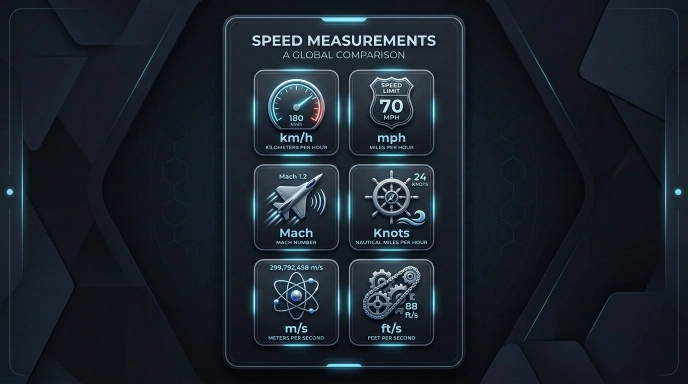
Kilometers per Hour (km/h) The international standard unit for road speed. Used on road signs and speedometers in every country except the United States, United Kingdom, Myanmar, and Liberia. The most widely used speed unit globally.
Miles per Hour (mph) The road speed standard in the United States and United Kingdom. Essential conversion for anyone traveling between metric and imperial countries.
Knots (kn — Nautical Miles per Hour) One knot equals one nautical mile per hour (approximately 1.852 km/h or 1.151 mph). The universal unit for maritime and aviation speed worldwide — all commercial aircraft, ships, and weather reports use knots.
Meters per Second (m/s) The SI (International System of Units) standard for speed in science and physics. Used in physics problems, scientific research, and engineering calculations. When a physics textbook says “a ball is thrown at 20 m/s,” this is the unit.
Feet per Second (ft/s) Used in ballistics, fluid dynamics, and engineering calculations in imperial-system countries. One foot per second equals approximately 0.305 m/s or 0.682 mph.
Mach Number The ratio of an object’s speed to the speed of sound at sea level (approximately 1,225 km/h at 15°C). Mach 1 is the speed of sound. Mach 2 is twice the speed of sound. Used in aviation and aerospace engineering.
How to Use the Speed Converter — Step by Step
Step 1 — Enter Your Speed Value Type any number into the Input Speed field. You can enter whole numbers (100), decimals (19.52), or any other numeric value.
Step 2 — Select Your Current Unit Choose your starting unit from the dropdown: km/h, mph, Knots, m/s, ft/s, or Mach. Results update immediately.
Step 3 — Read All Six Converted Values All six unit results display simultaneously in the results grid. No need to run separate conversions for each unit.
Step 4 — Use the Result Copy the value you need directly from the display. Results show to two decimal places for most units, four decimal places for Mach.
Speed Conversion Formulas — The Exact Math
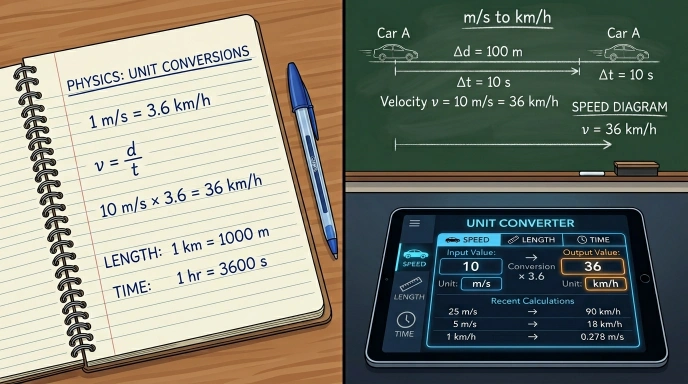
Core Conversion Factor: 1 mph = 1.609344 km/h
This is the foundational conversion factor, established by international treaty in 1959. It is exact — not approximate. One mile is defined as exactly 1,609.344 meters.
Complete Formula Reference
From km/h:
- km/h to mph: ÷ 1.609344
- km/h to m/s: ÷ 3.6
- km/h to knots: ÷ 1.852
- km/h to ft/s: ÷ 1.09728
- km/h to Mach: ÷ 1225.044
From mph:
- mph to km/h: × 1.609344
- mph to m/s: × 0.44704
- mph to knots: × 0.868976
- mph to ft/s: × 1.46667
From m/s:
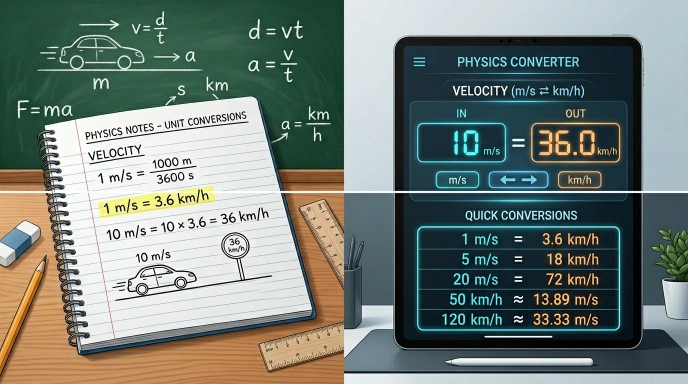
- m/s to km/h: × 3.6
- m/s to mph: × 2.23694
- m/s to knots: × 1.94384
- m/s to ft/s: × 3.28084
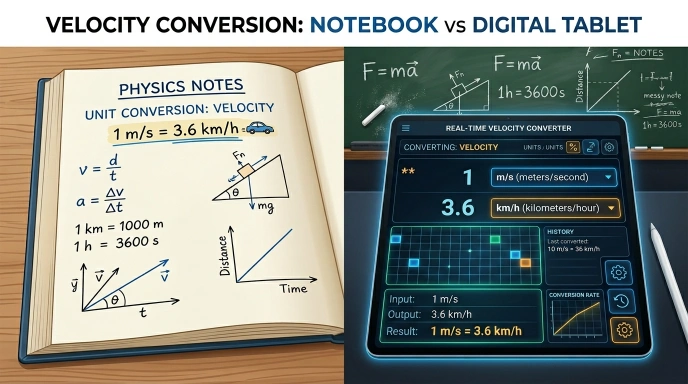
Why the factor 3.6 between m/s and km/h: 1 km/h = 1,000 meters per 3,600 seconds = 0.2778 m/s. Therefore m/s × 3.6 = km/h. Understanding this derivation is often required in physics examinations.
Speed Conversion Examples — Real Numbers Worked Out
How Fast Is 100 mph in km/h?
100 × 1.609344 = 160.93 km/h The answer: 100 mph is approximately 161 km/h — well above European motorway limits of 130 km/h.
How Fast Is 80 mph in km/h?
80 × 1.609344 = 128.75 km/h The US interstate speed limit in many states is 75–80 mph, falling between 121 and 129 km/h.
What Is 19.52 mph in km/h?
19.52 × 1.609344 = 31.42 km/h This specific conversion appears frequently in running contexts — it is roughly the top speed a trained sprinter can sustain briefly.
What Is 120 km/h in mph?
120 ÷ 1.609344 = 74.56 mph A common European motorway limit — approximately 74.6 mph, which falls between 70 and 75 mph US highway limits.
Speed of Sound in All Units
1 Mach = 1,225.044 km/h = 761.207 mph = 340.29 m/s = 1,116.45 ft/s = 661.47 knots
Common Specific Speed Conversions (mph to km/h)
| mph | km/h |
|---|---|
| 18 | 28.97 |
| 19 | 30.58 |
| 19.52 | 31.42 |
| 20 | 32.19 |
| 27.78 | 44.71 |
| 81 | 130.36 |
| 100 | 160.93 |
| 120 | 193.12 |
| 121 | 194.73 |
| 183 | 294.51 |
| 190 | 305.78 |
| 240 | 386.24 |
| 490 | 788.58 |
Speed, Distance, and Time — The Complete Formula Set
The speed converter handles unit conversion. The related speed-distance-time formulas handle the other calculations students and drivers need.
Three fundamental formulas:
Speed formula: s = d ÷ t Use when: you know distance and time, want to find average speed.
Distance formula: d = s × t Use when: you know speed and time, want to find distance covered.
Time formula: t = d ÷ s Use when: you know distance and speed, want to find time required.
Worked example — car journey: A car travels 240 km in 3 hours. Speed = 240 ÷ 3 = 80 km/h → In mph: 80 ÷ 1.609344 = 49.7 mph

Worked example — physics problem: A car accelerates from 0 to 100 km/h in 5 seconds. Find acceleration. Step 1: 100 km/h ÷ 3.6 = 27.78 m/s Step 2: Acceleration = 27.78 ÷ 5 = 5.56 m/s² Always convert to m/s before applying physics formulas in SI unit problems.
Worked example — flight time: A plane flies 2,450 miles at 490 mph. How long does it take? Time = 2,450 ÷ 490 = 5 hours
Speed Conversion Reference Tables
mph to km/h — Common Road Speeds
| mph | km/h | Context |
|---|---|---|
| 5 mph | 8.05 km/h | Brisk walking |
| 15 mph | 24.14 km/h | Fast cycling |
| 18 mph | 28.97 km/h | 18 mph to kmh |
| 19 mph | 30.58 km/h | 19 mph in kph |
| 20 mph | 32.19 km/h | Residential limit (UK) |
| 30 mph | 48.28 km/h | Urban speed limit (UK) |
| 50 mph | 80.47 km/h | Dual carriageway (UK) |
| 65 mph | 104.61 km/h | US highway limit |
| 70 mph | 112.65 km/h | UK motorway limit |
| 80 mph | 128.75 km/h | US interstate (many states) |
| 100 mph | 160.93 km/h | Track day reference |
| 120 mph | 193.12 km/h | Track day reference |
km/h to mph — European Road Speeds
mph to km/h — Common Road Speeds
| km/h | mph | Context |
|---|---|---|
| 30 km/h | 18.64 mph | European city zone |
| 50 km/h | 31.07 mph | Standard urban (Europe) |
| 80 km/h | 49.71 mph | Rural roads (Europe) |
| 100 km/h | 62.14 mph | Standard motorway |
| 120 km/h | 74.56 mph | Motorway (France, Poland) |
| 130 km/h | 80.78 mph | Autobahn recommended |
Speed Converter for Runners — Treadmill mph to km/h
One of the most common real-world speed conversion needs is running pace. Treadmills in the US display speed in mph. Treadmills in most other countries display km/h. Running training plans from different countries mix both units.
Common treadmill speed conversions:
| mph | km/h | Running Pace Context |
|---|---|---|
| 5.0 | 8.05 | Easy jog / beginner |
| 6.0 | 9.66 | Comfortable pace |
| 7.0 | 11.27 | Moderate training |
| 8.0 | 12.87 | Fast running |
| 9.0 | 14.48 | Sub-7 min/mile pace |
| 10.0 | 16.09 | Elite training pace |
| 12.0 | 19.31 | Sprint speed |
How fast is 7.0 on a treadmill in km/h? 7.0 mph = 11.27 km/h — approximately a 5:19/km running pace.
Miles per hour to km/h running — mental shortcut: Multiply mph by 1.6 for a quick estimate. 6 mph × 1.6 ≈ 9.6 km/h (actual: 9.656). Accurate enough for treadmill use.
Speed Conversion Checklist — Common Use Cases
- mph to km/h for international driving — use mph input, read km/h result
- km/h to mph for US/UK road reference — use km/h input, read mph result
- Physics problem converting km/h to m/s — divide by 3.6, or read m/s output directly
- Treadmill mph to km/h running pace — use mph input, read km/h
- Aviation/marine knots to km/h — use knots input, read km/h result
- m/s to km/h for science reporting — use m/s input
- Checking Mach equivalent — use km/h input, read Mach result
- ft/s to m/s for engineering — use ft/s input, read m/s result

Key Benefits of Using a Speed Converter
For students: Converting m/s to km/h is a daily need in physics class. A tool that shows all units simultaneously eliminates conversion errors in problem sets and examinations.
For runners and athletes: Treadmill mph and km/h training pace use different systems. Converting between them while planning sessions is a constant practical need.
For drivers traveling internationally: Understanding that a 60 mph US limit is approximately 97 km/h, or that a 130 km/h European motorway limit is approximately 81 mph, is safety-relevant for any international driver.
For aviation and maritime contexts: Weather reports and METAR data use knots. Converting knot-based wind speeds to km/h or mph requires the same formula this tool applies.
For engineers and researchers: When scientific papers express m/s results that need communicating in km/h for a general audience, precise conversion prevents rounding errors in professional work.
Speed Converter for Students — Physics and Mathematics
Speed conversion is a core topic in physics and mathematics education. Here’s how the conversions connect to academic study:
SI units in physics: Physics problems almost always use m/s as the standard speed unit. If a problem gives speed in km/h or mph, convert to m/s before applying formulas.
- km/h to m/s: divide by 3.6
- mph to m/s: multiply by 0.44704
Dimensional analysis example: To derive the 3.6 factor: 1 km/h = 1,000 m ÷ 3,600 s = 0.2778 m/s Reciprocal: 1 m/s = 3.6 km/h ✓
Understanding this derivation — not just memorizing the factor — is frequently tested in physics examinations.
Why Different Fields Use Different Speed Units
Not all speed units exist just for convenience — each one solves a specific real-world problem.
Knots exist because of geography, not tradition. A nautical mile equals one minute of latitude on Earth’s surface, which makes navigation math far simpler for ships and aircraft crossing oceans. That’s why pilots and sailors still use knots today instead of switching to km/h or mph.
Mach number isn’t a fixed speed — it’s a ratio. Mach 1 (the speed of sound) changes with altitude and temperature: it’s about 1,235 km/h at sea level, but noticeably slower at high altitude where the air is colder. This is why aircraft specifications always say “Mach 2” rather than a fixed km/h number — the actual speed depends on where the aircraft is flying.
m/s is the scientific default because it’s the SI base unit — physics and engineering calculations default to it so that formulas stay consistent across other SI units (distance in meters, time in seconds).
mph persists in the US and UK largely due to historical infrastructure — road signs, speedometers, and legal speed limits were standardized around mph decades before most of the world adopted the metric system, and changing it now would mean replacing millions of signs and vehicle displays.
In my experience building conversion tools, this is the single most common source of confusion: people assume one unit is “more accurate” than another, when really each one is just optimized for a different use case — navigation, science, aviation, or everyday driving.
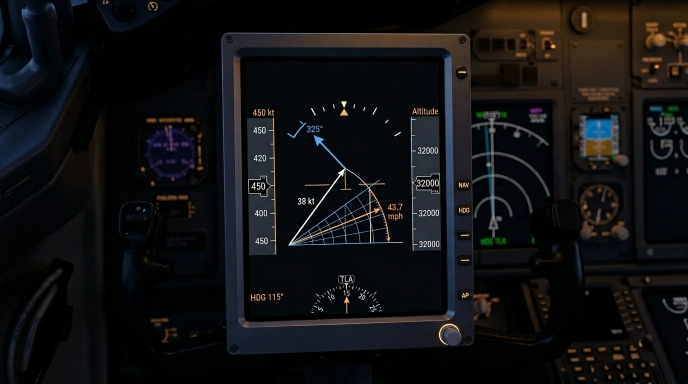
Output precision: Two decimal places for most units; four for Mach. The animated blue highlight on result update confirms the value has changed. Privacy: inputs never transmitted anywhere.
What Technology Powers This Speed Converter?
The speed converter runs entirely in JavaScript within your browser — no server communication, no data transmission, no account required.
Base unit conversion: All conversions use km/h as the internal base unit. When you enter a value, the tool first converts it to km/h using exact SI-standard conversion factors, then converts from km/h to all other output units simultaneously.
Conversion factors used:
- 1 mph = 1.609344 km/h (exact, international standard)
- 1 knot = 1.852 km/h (exact, international standard)
- 1 m/s = 3.6 km/h (exact)
- 1 ft/s = 1.09728 km/h (exact)
- 1 Mach = 1,225.044 km/h (15°C sea level)
Comparison — GetCalcBase vs. Other Speed Converters
| Feature | GetCalcBase | Other Tools | Other Tools | Other Tools |
|---|---|---|---|---|
| All 6 units simultaneously | ✅ Yes | ❌ One pair at a time | ✅ Yes | ⚠️ Limited |
| Real-time (no button click) | ✅ Yes | ❌ Submit required | ❌ Submit required | ✅ Yes |
| Mach number included | ✅ Yes | ❌ No | ✅ Yes | ❌ No |
| Visual result grid | ✅ Highlighted | ❌ Text only | ❌ Text only | ❌ Text only |
| Education-focused content | ✅ Yes | ⚠️ Basic | ❌ No | ⚠️ Basic |
| No login required | ✅ Always | ✅ Yes | ✅ Yes | ✅ Yes |
Frequently Asked Questions (FAQs)
What is the easiest way to convert speed from mph to km/h?
Multiply mph by 1.609344 for an exact result. For quick mental math, multiply by 1.6 — the result is within 0.4% of the exact value. The speed converter above does this instantly for any value you enter.
How fast is 70 mph in km/h?
70 × 1.609344 = 112.65 km/h. The UK motorway speed limit is 70 mph, approximately 113 km/h. Many European countries have motorway limits of 120 to 130 km/h, which is 75 to 81 mph.
How do I calculate my speed?
Use: Speed = Distance ÷ Time. Make sure units match — if distance is in kilometers, time must be in hours to get km/h. If distance is in meters and time in seconds, the result is m/s. Multiply m/s by 3.6 to convert to km/h.
How fast is 7.0 on a treadmill in km/h?
7.0 mph = 11.27 km/h — approximately a 5:19/km running pace, which is a solid moderate training speed.
What is 20 mph in kilometers per hour?
20 × 1.609344 = 32.19 km/h. This is a common residential speed limit in the UK and a typical cycling speed for a reasonably fit cyclist.
How many km is 1 mph?
1 mph = 1.609344 km/h — the exact, internationally defined conversion factor. At 1 mph, you cover 1.609344 kilometers in one hour.
Conclusion — Speed Conversion for Every Context
Speed units create genuine confusion across education, sport, driving, and professional work. Physics uses m/s. Roads use mph or km/h depending on the country. Aviation uses knots. Aerospace uses Mach. A student, a runner, a driver, and a pilot all face different conversion needs — but the same underlying math.
This free speed converter at GetCalcBase handles all six major speed units simultaneously, in real time, with internationally exact conversion factors. Enter any value, select your unit, and see all conversions instantly.
Whether you’re solving a physics problem, checking a treadmill speed, planning a cross-border drive, or studying for an examination, this tool gives you accurate results in seconds.
Content prepared for GetCalcBase.com — Education Tools Category Tool: Ultimate Speed Converter Conversion factors based on SI standards and the 1959 International Agreement on Units Mach calculated at standard sea-level atmospheric conditions (15°C) Linkedin
Need to convert something else alongside speed — like travel time or distance? Our Time Difference Calculator and Percentage Decrease Calculator can help round out your calculations.
Disclaimer
This speed converter uses internationally standardized conversion factors as defined by the SI (International System of Units) and the 1959 International Agreement on Units and Measures. The Mach conversion is calculated at the standard sea-level reference condition of 15°C, where the speed of sound is approximately 1,225.044 km/h. Mach values at altitude or in different atmospheric conditions will differ from these calculations.
This tool is designed for educational, reference, and practical everyday use. For safety-critical applications in aviation, maritime navigation, or engineering, always verify conversion results against certified instruments and official reference standards.
What the Get Calculator Base Community Says
Average Rating: 4.9/5 based on our beta users