

Quick Answer
How to avoid PMI comes down to a few real options: put down at least 20%, use a piggyback loan structure, or choose lender-paid PMI in exchange for a slightly higher interest rate. If you’re already paying it, PMI automatically ends once your loan balance drops to 78% of the home’s original value — you don’t have to do anything for that to happen.
Introduction
PMI catches a lot of first-time buyers off guard. It shows up as an extra line item on the mortgage estimate, and suddenly the monthly payment is higher than the number they’d been mentally budgeting for.
It’s not a scam or a hidden fee — it’s insurance that protects the lender, not you, if you default on a loan with less than 20% down. But it’s also an extra monthly cost that’s easy to avoid or minimize once you understand how to avoid PMI in the first place.
What Is PMI, Exactly?

Private Mortgage Insurance is required on most conventional loans when your down payment is under 20% of the home’s price. It typically costs between 0.5% and 1.5% of your loan amount annually, split into monthly payments added to your regular mortgage bill.
The exact rate depends on your credit score, your down payment size, and your loan-to-value ratio — generally, the closer you are to 20% down, the lower your PMI rate.
PMI Cost Example Table
| Loan Amount | PMI Rate | Estimated Monthly PMI |
|---|---|---|
| $300,000 | 0.5% | ~$125/month |
| $300,000 | 1.0% | ~$250/month |
| $400,000 | 0.5% | ~$167/month |
| $400,000 | 1.0% | ~$333/month |
How to Avoid PMI: 5 Real Options

1. Put Down 20% or More
The most straightforward option. At 20% down, PMI generally isn’t required at all on a conventional loan, since the lender’s risk is considered low enough.
2. Consider a Piggyback Loan
Some buyers use a second loan (often called an “80-10-10” structure — 80% first mortgage, 10% second loan, 10% down payment) to cover part of the down payment, avoiding PMI on the primary mortgage. This comes with its own trade-offs, including a second monthly payment and potentially a higher rate on that second loan, so it’s worth comparing the total cost carefully against simply paying PMI.
3. Choose Lender-Paid PMI
Some lenders offer to cover PMI in exchange for a slightly higher interest rate on the whole loan. This can make sense if you plan to refinance or sell before the higher rate costs more than PMI would have over the same period — but it’s a trade-off that needs real math, not a gut decision.
4. Ask About VA Loans (If You Qualify)
VA loans for eligible veterans and service members don’t require PMI at all, regardless of down payment size — one of the more overlooked benefits of that loan program.
5. Consider Lender Credits Toward a Larger Down Payment
Some buyers use negotiated seller credits or a temporary rate buydown to redirect funds toward reaching the 20% threshold faster. This is worth discussing directly with your lender if you’re close to the cutoff.
When Does PMI Automatically End?
By federal law (the Homeowners Protection Act), lenders must automatically cancel PMI once your loan balance reaches 78% of the home’s original value, based on your original amortization schedule — regardless of current market value. You can also request cancellation earlier once you hit 80% loan-to-value, assuming you’re current on payments and meet your lender’s requirements, which sometimes includes a new appraisal.
Why Learning How to Avoid PMI Matters Beyond the Monthly Cost
Beyond the direct dollar savings, knowing how to avoid PMI (or knowing exactly when it’ll drop off) gives you a clearer picture of your true monthly budget from day one, instead of an estimate that quietly changes once the insurer gets involved.
PMI vs Other Types of Mortgage Insurance
It’s worth knowing PMI isn’t the only kind of mortgage insurance you might encounter:
- PMI applies to conventional loans and can be cancelled once you reach sufficient equity.
- FHA Mortgage Insurance Premium (MIP) applies to FHA loans and, depending on your down payment, may last for the life of the loan rather than dropping off automatically.
- USDA Guarantee Fee applies to USDA loans and works differently still.
If you’re comparing loan types, this distinction matters more than most buyers realize going in.
Common Mistakes with PMI
- Not tracking your loan-to-value ratio and missing the point where you could request early cancellation, effectively overpaying for months or years.
- Assuming PMI and homeowners insurance are the same thing — they’re not. PMI protects the lender; homeowners insurance protects you and your property.
- Overpaying for lender-paid PMI without comparing the long-term cost of the higher interest rate against simply paying monthly PMI and cancelling it later.
- Not requesting a new appraisal when home value appreciation alone might have pushed you past the 20% equity threshold faster than paydown would.
Checklist: How to Avoid PMI or Get It Removed Sooner
- Calculate whether reaching 20% down is realistic for your timeline
- Compare piggyback loan costs against standard PMI if you’re short of 20%
- Ask your lender about lender-paid PMI trade-offs if you plan to refinance soon
- Track your loan-to-value ratio each year to know when you hit 80%
- Request PMI cancellation once you reach 80% equity, rather than waiting for automatic termination at 78%
- Confirm whether your loan type is PMI (conventional) or MIP (FHA), since the rules differ
See the Full Cost Picture
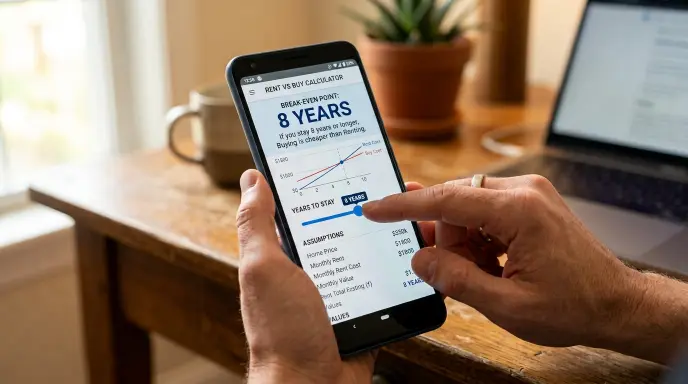
PMI is just one factor in the bigger buying-vs-renting decision, but it’s one that’s easy to underweight. Our rent vs buy calculator automatically factors PMI in when your down payment is under 20%, and removes it once you hit 20% equity — so you can see your real break-even year with PMI already accounted for, instead of estimating it separately.
Frequently Asked Questions
How much does PMI typically cost? Usually between 0.5% and 1.5% of your loan amount per year, depending on your credit score, down payment size, and loan-to-value ratio.
Can I remove PMI before reaching 20% equity? You can request removal at 80% loan-to-value in some cases, and it’s automatically required to end at 78% by law, assuming you’re current on payments.
Does PMI protect me as the homeowner? No — PMI protects the lender in case you default on the loan. It has no direct financial benefit to you as the buyer.
Is a piggyback loan a good way to avoid PMI? It can be, but it adds a second loan with its own interest rate and payment. Compare the total cost against simply paying PMI before deciding which is cheaper for your situation.
Is FHA mortgage insurance the same as PMI? No. FHA loans use MIP (Mortgage Insurance Premium), which follows different cancellation rules and can last the life of the loan depending on your down payment.
Will paying extra toward my mortgage help me avoid PMI faster? Yes — extra principal payments lower your loan-to-value ratio faster, which can help you hit the 80% threshold sooner and request cancellation earlier than the automatic 78% termination point.
Conclusion
PMI isn’t something to fear, but it is something worth planning around from the very start. Whether you avoid it entirely with a 20% down payment or just want to know exactly when it’ll drop off automatically, understanding the mechanics puts you back in control of your monthly budget instead of leaving it as a mystery line item.
This article is for informational purposes only and does not constitute financial advice. Consult a licensed mortgage professional for guidance specific to your loan.