
Can Drinking Water Before Meals Accelerate Weight Loss? The Scientific Truth
This is my personal experience.
Just like humans need water to stay healthy, animals need proper hydration too. I have a cat and a dog, and for a long time I honestly didn’t know how much water they needed or when to offer it consistently — animals can’t tell us their needs directly.
That’s what pushed me to look for a tool that could guide me on water timing and hydration awareness. I found a water calculator tool, and it genuinely helped me build a better routine — for daily intake timing, hydration habits, and basic consumption awareness, for both myself and my pets.
To be clear: this tool is for informational and educational purposes only. It isn’t medical or veterinary advice. For proper health guidance, always consult a doctor or an animal care professional. Even so, it made hydration awareness simple and practical for me day to day.
Losing weight is often framed as a battle of calories in versus calories out. But what if a simple, free resource could give you a real edge? Hydration is increasingly described as the “silent partner” in fat loss. If you’ve been using a water intake calculator for weight loss, you’re already ahead of most people who never think about this at all.
In this guide, we’ll look at how water affects your metabolic rate, how much you should drink based on your weight, and the timing that turns hydration into an actual fat-loss tool — not just a wellness cliché.
The Connection Between Hydration and Metabolic Rate
One of the more interesting findings in hydration research is water’s role in triggering thermogenesis — your body burning extra energy just to process what you drink. Research on this effect (often cited as the “water-induced thermogenesis” studies from the early 2000s) found that drinking around 500ml of water can noticeably raise metabolic rate for close to an hour afterward. The exact percentage varies between studies, but the underlying mechanism — your body spending energy to warm and process the water — is well established.
When you use a water intake calculator for weight loss like ours, you’re not getting a random number. You’re getting a baseline that keeps this process working consistently, rather than relying on random sips throughout the day. For people in specific regions, using a water intake calculator in India or other tropical climates matters even more, since heat significantly increases the body’s fluid demand.
Pro tip — the thermogenic boost: try drinking your pre-meal water cold rather than room temperature. Your body spends a small amount of extra energy warming that water to 37°C, giving your metabolism a modest but consistent “free” calorie burn.
How Much Water to Drink in a Day According to Weight (KG)
One of the biggest mistakes in weight-loss journeys is following a one-size-fits-all rule. Your body is unique, and your hydration target should reflect that. The most accurate starting point is a water intake calculator by weight.
A standard medical formula is roughly 35ml per kilogram of body weight. For weight-loss specifically, many practitioners suggest a slight increase, to help flush out the metabolic waste produced during fat breakdown.
| Weight | Standard Intake (Liters) | Weight Loss Target (Liters) |
|---|---|---|
| 50 kg | 1.75 L | 2.1 L |
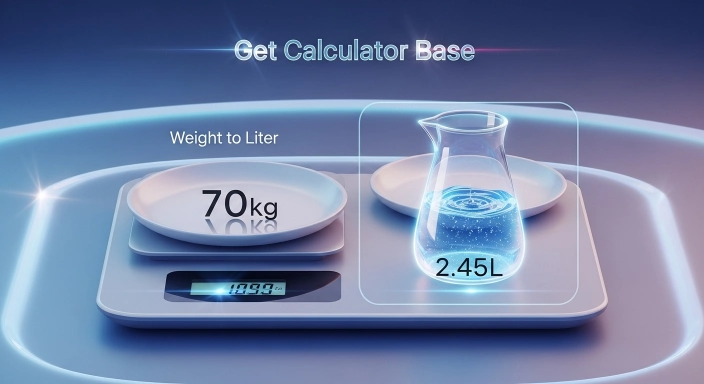
| 70 kg | 2.45 L | 2.8 L |
| 90 kg | 3.15 L | 3.6 L |
| 110 kg | 3.85 L | 4.3 L |
Quick bottle reference: if you track by bottle size rather than liters, a standard 500ml bottle gets you roughly a quarter of the way to a 2-liter target, and about 6 refills of a 500ml bottle covers a 3-liter goal comfortably.
To get your exact number without doing this math yourself, use our Daily Water Intake Calculator directly.
Hunger vs. thirst logic: as someone who spends hours at a desk, I’ve noticed the brain often confuses thirst with hunger. Before reaching for a snack, try drinking two glasses of water and waiting 15 minutes — a large share of the time, that “hunger” feeling fades on its own.
The Direct Link Between Water and Weight Loss
Water affects weight loss through four distinct mechanisms — not one vague idea about “flushing toxins.”
1. Hunger suppression before meals
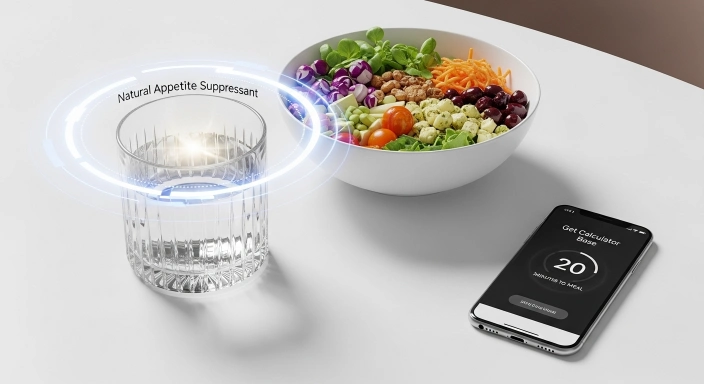
A 2019 study in the journal Obesity found that drinking 500 ml of water 20-30 minutes before each main meal reduced food intake by an average of 13% in overweight adults over 12 weeks — without any other dietary change. The mechanism is straightforward: water occupies stomach volume and triggers stretch receptors that signal satiety.
2. Temporary metabolic rate increase
Research published in the Journal of Clinical Endocrinology and Metabolism found that drinking 500 ml of cold water increased metabolic rate by 30% for approximately 30-40 minutes after consumption. The effect is modest but real — regular hydration across a day compounds this.
3. Confusion between thirst and hunger signals
Thirst and mild hunger are processed in overlapping areas of the hypothalamus. Many mid-afternoon hunger signals — especially between meals, in air-conditioned offices — are actually thirst signals. Drinking water before eating a snack addresses the actual need more than half the time.
4. Improved exercise performance
Even 1-2% body water loss measurably reduces strength output, aerobic capacity, and motivation during exercise. If your exercise sessions are underperforming because of dehydration, calorie burn is lower than it should be.
How Much Water to Drink for Weight Loss — By Body Weight
The clinical baseline for healthy adults is 35 ml per kilogram of body weight per day. This covers basic physiological needs at moderate activity in a temperate climate.
| Body Weight | Daily Baseline (35 ml/kg) |
|---|---|
| 50 kg | 1.75 litres |
| 60 kg | 2.1 litres |
| 70 kg | 2.45 litres |
| 80 kg | 2.8 litres |
| 90 kg | 3.15 litres |
| 100 kg | 3.5 litres |
Adjustments That Change Your Requirement
The baseline figure changes significantly based on lifestyle factors:
Physical activity: Add 500 ml for light exercise (30-45 min walk), 750 ml for moderate training, 1,000+ ml for intense sessions or manual labour.
Hot climate: Pakistan, UAE, India, and Saudi Arabia summers add 500-750 ml to daily requirements — your body loses significantly more through sweat and respiration in heat.
Caffeine intake: Coffee and tea are mild diuretics. Each cup of coffee (roughly 200 ml) effectively reduces net hydration by approximately 100-150 ml — you absorb about 50-75% of what you drink. Add one additional glass of water per 2-3 cups of coffee.
High-sodium diet: Processed foods, restaurant meals, and fast food significantly increase renal water demand. Add 250-500 ml if your diet is regularly high in sodium.
The Water Intake Calculator accounts for all four factors — giving you an adjusted target rather than a flat number.
Why the “Pre-Meal” Strategy Works
Drinking water 20–30 minutes before a meal is a well-supported strategy for weight management. Here’s why it works:

- Natural appetite suppressant — water fills the stomach, signaling partial fullness to the brain
- Reduced calorie intake — a well-known Virginia Tech study following middle-aged and older adults found that those who drank water before meals lost meaningfully more weight over time than those who didn’t, largely by eating less at each sitting
- Confusion management — since the brain often misreads thirst as hunger, staying ahead of hydration reduces unnecessary “boredom eating”
If you’re tracking nutrition closely, pairing your hydration plan with our Macro Calculator for Weight Loss helps ensure you’re hitting protein and carb targets while staying properly fluid-balanced too.
Where Did “8 Glasses a Day” Actually Come From?
If you’ve ever wondered why “8 glasses a day” gets repeated everywhere, the honest answer might surprise you: it isn’t backed by the strong scientific consensus most people assume. The guideline traces back to a mid-20th-century recommendation that was never tied to a rigorous clinical study — it became popular through repetition, not research.
This matters practically because a flat 8-glass rule ignores body weight, climate, and activity level entirely. A 50kg person in a cool climate and a 110kg person in a hot, humid one have very different real needs — which is exactly why a water intake calculator by weight gives a far more useful number than a generic glass count ever could.
Personalized Hydration: Age, Gender, and Special Conditions
A water intake calculator for a woman’s weight-loss needs can differ from a man’s, largely due to body composition. Lean muscle mass, generally higher in men, holds more water, while hormonal shifts in women can cause temporary water retention.
A water intake calculator by age matters too — as we get older, the body’s thirst mechanism naturally weakens, which means relying on “feeling thirsty” becomes less reliable over time. If you’re expecting, your hydration needs shift even more, and tracking your timeline with our Pregnancy Date Calculator can help you stay on top of both.
The “3PM crash” fix: a lot of afternoon fatigue is actually mild dehydration in disguise. Instead of reaching for more coffee, which is itself a mild diuretic, use a structured intake schedule to hit your 2.8L or 3.6L target consistently across the day rather than all at once.
The Role of Units: KG, Litres, and Ounces
Whether you’re searching for a water intake calculator in kg/litres or just want to know “how many glasses,” precision matters. In India and the UK, litres are the standard unit, and reference tools like the NHS guidance emphasize spreading intake consistently throughout the day rather than front-loading it.
Our tool goes further than a basic NHS-style baseline by factoring in diet and weather conditions directly, rather than treating everyone as if they live in the same climate. You can explore related tools in our Health Calculators category as well.
5 Tips to Maximize Fat Loss via Hydration
- Temperature matters — cold water may give a small extra metabolic boost as your body warms it internally
- Flavor naturally — if plain water feels boring, add lemon or cucumber for taste and mild electrolyte support without extra calories
- Watch your sodium — high salt intake makes your body retain water; a weight-based calculator helps you judge if you need extra fluid to compensate
- Track visually — using a 1-liter bottle as a reference lets you know exactly where you stand by midday
- Listen to your body — a calculator gives you a target, but always adjust if you feel dizzy, unusually thirsty, or unwell
When to Drink — The Timing That Matters
Total daily water intake matters, but timing affects weight loss results:
Morning (before breakfast): 500 ml within 30 minutes of waking. Overnight fasting dehydrates you — this replenishes and signals the metabolism to activate.
Before meals (20-30 minutes): 500 ml. This is the pre-meal timing from the research cited above — the most directly weight-loss-relevant habit.
During exercise: 150-250 ml every 15-20 minutes of activity.
Mid-afternoon (2-3 PM): 300-500 ml. This is the time when thirst-hunger confusion most commonly leads to unnecessary snacking.
Avoid: Large amounts immediately before bed — this disrupts sleep, and poor sleep directly affects hunger hormones (ghrelin and leptin) in ways that increase calorie intake the following day.
Signs Your Hydration Is Actually Affecting Weight Loss
Positive signs you are well-hydrated:
- Urine is pale straw yellow (not clear, not dark)
- Fewer mid-meal hunger signals between breakfast and lunch
- Energy levels stable through the afternoon
- Exercise feels more manageable at the same intensity
Signs dehydration may be stalling progress:
- Dark yellow urine, especially in the morning
- Consistent afternoon headaches — often dehydration, not stress
- Feeling hungry 1-2 hours after a full meal
- Noticeably lower performance in exercise sessions
Pair Water Intake With Your Calorie Target
Water supports but does not replace a calorie deficit. The two work together:
- Use the Calorie Calculator to find your daily calorie target
- Use the Water Intake Calculator to find your daily hydration target
- Use the Intermittent Fasting Calculator if you prefer time-restricted eating — staying hydrated during fasting windows reduces hunger significantly
Frequently Asked Questions
Does drinking water help you lose weight fast?
Water supports weight loss but does not cause it directly. The mechanisms are indirect: reduced calorie intake through pre-meal satiety, slightly elevated metabolism, and better exercise performance. The combination of accurate calorie deficit and consistent hydration produces better results than either alone.
How much water should I drink if I weigh 70 kg?
Baseline: 70 × 35 ml = 2.45 litres. Adjusted for moderate activity (+500 ml) and moderate heat (+350 ml) = approximately 3.3 litres in summer. Use the Water Intake Calculator with your specific inputs for a personalised figure.
Can drinking too much water cause problems?
Yes — hyponatremia (dangerously low sodium from over-hydration) is possible but rare in everyday contexts. It typically occurs in endurance athletes consuming large volumes rapidly. For most people, thirst is an adequate upper limit.
Is 3 litres of water a day too much for weight loss? For most people weighing between 70 and 90kg, 3 litres is a reasonable target. Use a Daily Water Intake Calculator to confirm the number that fits your specific weight and activity level.
Does drinking water burn belly fat directly? Not on its own. Water doesn’t “melt” fat, but it’s required for lipolysis — the process your body uses to break down stored fat for energy. Without enough water, that process simply can’t run efficiently.
What does general hydration guidance (like the NHS) recommend? Most public health guidance suggests roughly 6 to 8 glasses of fluid a day as a baseline, though this doesn’t account for intense exercise or hot climates, which both increase real needs significantly.
How much water should I drink in a day according to my weight in kg? A reasonable starting rule is about 35ml per kg of body weight. At 70kg, that works out to roughly 2.45 litres as a baseline before adjusting for activity or climate.
Can I use a water intake calculator for India-specific or tropical needs? Yes — selecting a “tropical” or “extreme heat” setting adjusts the recommendation upward, which matters in climates like India’s, where sweat loss and fluid turnover are naturally higher.
Conclusion
The underlying science is fairly clear: water is a genuine catalyst for weight management. It supports your metabolic rate, helps your system process stored fat, and makes hunger easier to manage accurately. Using a specialized water intake calculator for weight loss removes the guesswork, giving your body a target that actually reflects your weight, climate, and activity — not a generic glass count.
Continue exploring our suite of free tools at GetCalcBase for more detailed health and fitness calculators.
Disclaimer: This information is provided for educational purposes only. While proper hydration is healthy, excessive water intake can lead to a dangerous condition called hyponatremia. Always consult a healthcare provider before starting a new weight-loss or hydration regimen, especially if you have a heart or kidney condition.
Content reviewed with input from Jacob Barr and prepared by Waseem Aijaz.
More Free Health Tools at GetCalcBase:
- Health Calculators
- Water Intake Calculator
- Intermittent Fasting Calculator
- Macro Calculator for Weight Loss
- Peptide Calculator
- Pregnancy Date Calculator
- Chronological Age Calculator